



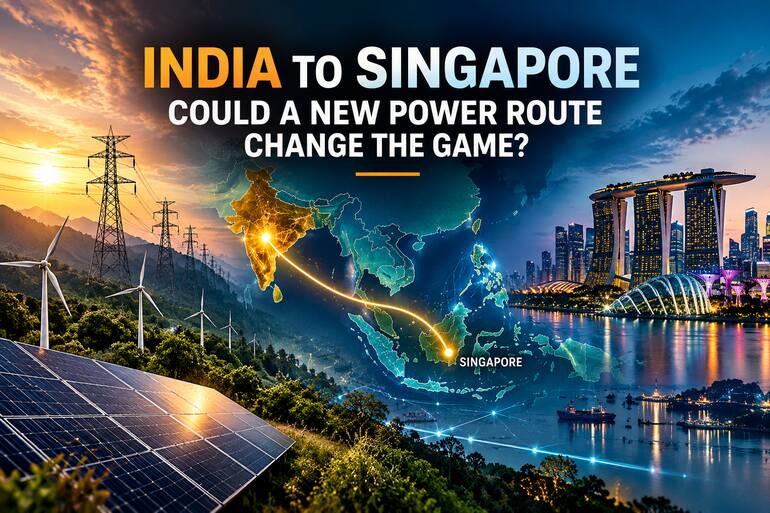
India’s energy co-operation agenda for 2026-2030 could open new avenues for power infrastructure companies, clean-energy businesses and technology startups. Here is where Indian businesses could find opportunities as regional electricity markets evolve.
India is expanding its power sector. Now, a bigger question is emerging: can its power-sector expertise open doors across Asia?
That possibility came into focus at the 20th East Asia Summit Energy Ministers’ Meeting in Manila on October 8, 2026. Hon’ble Union Minister of State for Power and New & Renewable Energy Shri Shripad Yesso Naik highlighted India’s interest in deeper regional co-operation, with the ASEAN Power Grid, cross-border electricity trade, renewable energy integration, energy storage and green hydrogen among the priorities.
One proposal drew particular attention: a possible 2,000 MW power interconnection between India and Singapore. One option under exploration involves a transmission corridor of approximately 3,000 km, connecting Imphal with Singapore through Myanmar, Thailand and Malaysia.
The proposal remains under exploration. But it raises a larger question: could India’s experience in power generation, transmission and clean energy deployment help its businesses access new markets across Southeast Asia?
The wider significance of the meeting lies in its focus on regional connectivity, technology exchange and institutional cooperation. For Indian businesses, the opportunity is to understand where these priorities could translate into demand for infrastructure, equipment, technology and specialized services.
The Strategy Behind India’s Growing Energy Engagement
The Minister’s message centered on three priorities: energy security, regional connectivity and the sharing of technical capabilities.
Energy security remains fundamental. Countries need reliable and affordable supplies, resilient infrastructure and the ability to respond to disruptions. Cooperation on strategic petroleum reserves, LNG and gas supply security, and emergency preparedness can support these objectives.
Regional electricity connectivity is another priority. India’s support for the ASEAN Power Grid and multilateral electricity trading reflects an interest in strengthening co-operation between national power systems and developing the infrastructure and arrangements needed to facilitate cross-border trade.
The third priority is the exchange of technical expertise. India has experience in renewable energy deployment, transmission planning, grid integration and large-scale power infrastructure. Sharing these capabilities with regional partners could create opportunities for Indian institutions and businesses to contribute to projects beyond the domestic market.
The meeting highlighted areas in which regional co-operation could generate future requirements for infrastructure, technology and specialist services.
For businesses, these signals provide a starting point for identifying capabilities that may become commercially relevant.
Inside ASEAN’s Energy Roadmap for 2026-2030
The ASEAN Plan of Action for Energy Cooperation (APAEC) 2026-2030 provides a framework for understanding the region’s energy priorities over the next five years.
Its objectives include strengthening regional energy connectivity, improving energy security, accelerating decarbonization and promoting sustainable energy development. The ASEAN Power Grid is central to this agenda, alongside renewable energy, energy efficiency, oil and gas cooperation, and regional energy planning.
The plan also establishes collective aspirational targets for 2030: a 30% share of renewable energy in total primary energy supply, a 45% share of renewable energy in installed power capacity, and a 40% reduction in energy intensity compared with the 2005 baseline. These are regional ASEAN targets, not targets assigned individually to India.
These ambitions point towards several areas where businesses could investigate demand: transmission infrastructure, grid modernization, renewable energy integration, storage, digital energy management and technical services.
India’s engagement under the ASEAN-India Plan of Action 2026-2030 provides another channel for co-operation. For Indian companies, the practical value of these frameworks lies in understanding the region’s direction and identifying where their products and expertise could meet future requirements.
The plan is not a list of guaranteed orders. It is a starting point for market research, partnership building and business planning.
India’s Domestic Energy Expansion Could Become a Regional Advantage
India has a substantial base from which to explore these opportunities. According to the Ministry of Power, the country’s installed electricity generation capacity reached 558.8 GW as of 30 September 2026, including 308 GW of non-fossil capacity. Non-fossil sources accounted for approximately 55% of installed capacity.
India also achieved 50% of cumulative installed electricity generation capacity from non-fossil sources in June 2025, five years ahead of its 2030 target.
Behind these figures is a broad domestic ecosystem of renewable energy developers, transmission utilities, engineering and construction companies, equipment manufacturers, software providers and technical institutions.
The opportunity is to examine how these capabilities could serve a wider regional market. Potential areas include transmission engineering, renewable energy forecasting, storage integration, grid monitoring, system planning and technical training.
The commercial possibilities extend beyond electricity exports. They include supplying the infrastructure, equipment, technology and services needed to develop and operate modern power systems.
Six Areas Where Indian Power and Energy Companies Could Find Opportunities
- Transmission Infrastructure and Grid Equipment
The proposed India-Singapore connection brings the infrastructure requirements of cross-border electricity trade into focus. The wider ASEAN Power Grid agenda also points towards continued interest in strengthening regional interconnections.
Potential areas of demand include transmission lines, substations, transformers, conductors, cables, switchgear, protection systems and high-voltage engineering.
Indian engineering, procurement and construction (EPC) companies could explore regional infrastructure projects as they emerge. Equipment manufacturers could assess whether their products meet the technical specifications and procurement requirements of utilities and project developers in target markets.
Smaller manufacturers and specialist engineering firms may find entry points in components, testing, maintenance and technical support rather than undertaking entire infrastructure projects.
What businesses can do: Identify relevant regional markets, review technical standards, understand procurement requirements and build relationships with potential customers and local partners.
- Renewable Energy Forecasting and Grid Integration
As solar and wind capacity expands, electricity systems need better estimates of how much power will be generated and when it will be available.
The Minister identified renewable energy forecasting and grid integration as areas for co-operation, highlighting a market that extends beyond conventional power equipment.
Technology businesses could develop software for generation forecasting, demand prediction, renewable asset monitoring, grid analytics and operational planning.
A startup does not need to build a power plant or manufacture electrical equipment to participate. It could focus on helping solar or wind projects operate more predictably, reduce inefficiencies or improve energy scheduling.
Potential customers include renewable energy developers, utilities and commercial and industrial energy users.
What businesses can do: Develop solutions with measurable benefits, such as improved forecasting accuracy, better asset performance or reduced operating costs. Test them with domestic customers before exploring regional expansion.
- Battery Storage and Energy Management
Energy storage was another priority highlighted at the meeting. Battery energy storage systems can help manage fluctuations in electricity supply and demand, shift electricity to periods when it is needed and support flexible grid operations. This creates opportunities across the storage value chain.
Established companies could explore storage project development, system integration, power conversion equipment, thermal management and control systems. Startups could concentrate on battery monitoring, performance analytics, predictive maintenance and energy management software.
The market is not limited to battery-cell manufacturers. Software, integration, monitoring and maintenance businesses can address specific operational needs.
What businesses can do: Identify a clear problem in battery performance, safety, utilization or energy management. Develop a solution that demonstrates measurable value to storage operators and other prospective customers.
- Green Hydrogen and Emerging Clean Energy Technologies
Green hydrogen and other emerging technologies featured in India’s proposed areas of co-operation.
Green hydrogen could create opportunities in electrolyzers, production equipment, engineering services, storage systems, safety technologies and monitoring solutions. Industrial users seeking to reduce emissions may also require specialized equipment and services to integrate hydrogen into their operations.
Startups could focus on a particular component, industrial application, process improvement or safety challenge rather than developing an entire hydrogen production system.
Carbon capture, utilization and storage (CCUS) is another area identified by the Minister. Services associated with carbon measurement and carbon markets may also offer opportunities, including those linked to India’s Carbon Credit Trading Scheme.
What businesses can do: Evaluate customer demand, technology readiness, project economics and applicable regulations before investing. A clearly defined problem with a paying customer is a stronger starting point than entering a sector simply because it has strategic importance.
- Grid Digitalization and Intelligent Systems
As electricity networks become more complex, digital tools can help operators monitor assets, identify emerging problems and manage infrastructure more efficiently.
The ASEAN plan’s emphasis on grid modernization and digitalization points towards potential opportunities for companies working in digital substations, remote asset monitoring, predictive maintenance, power-system simulation, data analytics and operational technology cybersecurity.
India’s focus on grid resilience and emergency preparedness adds another dimension to this opportunity.
For startups, solving one clearly defined operational problem may be more practical than attempting to build an all-encompassing grid-management platform. A company that helps a utility detect equipment faults earlier or improve asset monitoring could offer a more focused value proposition.
What businesses can do: Work with utilities, renewable developers and industrial energy users to identify operational challenges. Develop solutions that integrate with existing systems and meet customer requirements for reliability and security.
- Technical Training, Testing and Consulting
Energy infrastructure also requires trained professionals, technical studies, testing capabilities and specialist services.
The Minister called for stronger institutional links between the ASEAN Centre for Energy and Indian institutions, including NTPC, POWERGRID, the Central Electricity Authority, the National Institute of Wind Energy, the National Institute of Solar Energy and the National Power Training Institute. He also referred to India’s announced support for training 400 professionals in grid connectivity.
These initiatives highlight a potential role for engineering consultancies, training providers, testing laboratories, simulation software companies and specialist advisory firms.
Their services could include power-system studies, grid integration assessments, renewable energy training, energy management and operational support.
What businesses can do: Build specialized expertise, establish institutional partnerships and identify programmes where their services meet an actual requirement. Smaller firms may be able to enter through focused consulting or training assignments.
What Should Energy Startups Build for 2026-2030?
The most important lesson for entrepreneurs is that a policy priority does not automatically translate into a successful business. A viable company still needs a clearly defined customer, a problem worth solving and a product or service that delivers measurable value.
The regional energy agenda suggests several directions worth exploring:
- Software startups: Renewable energy forecasting, battery optimization, asset monitoring and grid analytics.
- Engineering startups: Power-system studies, protection systems, commissioning support, testing and specialized transmission equipment.
- Clean energy startups: Storage integration, energy management, hydrogen-related components and renewable asset performance.
- Services businesses: Energy audits, technical training, project preparation, market research and specialist advisory services.
- Manufacturing startups: Components for transmission systems, substations, monitoring equipment and power conversion.
Each business model requires a different approach. Software companies need to demonstrate that their solutions work in real operating environments. Equipment manufacturers must meet technical standards and establish reliable supply chains. Engineering firms need the appropriate qualifications, experience and partnerships.
Consider a startup developing grid analytics software. Its founders could begin by speaking to domestic utilities and renewable energy developers. Which operational problems are costing them money? What information is missing? Would a new tool improve decisions enough to justify its price?
A prospective equipment manufacturer should undertake similar groundwork by identifying procurement specifications, certification requirements and potential buyers before investing heavily in production capacity.
The first objective should be to establish a viable business in a clearly defined market. Regional expansion can follow once the company has demonstrated its capabilities and identified customers who need them.
How Can Businesses Prepare Now?
Companies do not need to wait for a specific cross-border power project to become operational before examining the possibilities.
Transmission companies can assess their technical qualifications and identify potential regional partners. Equipment manufacturers can review applicable standards and shortlist utilities, EPC contractors and project developers that may require their products. Technology startups can test their solutions with domestic customers while investigating whether similar problems exist in neighbouring markets.
Businesses considering regional expansion should study local procurement practices, certification requirements and the role of domestic partners. Understanding how utilities purchase equipment and services can be as important as having a competitive product.
Industry associations, technical conferences, institutional partnerships and relevant co-operation programmes may help companies build relationships and learn more about emerging requirements.
For early-stage founders, the immediate priority should be to develop a credible product, win initial customers and demonstrate results. Established companies may be able to explore regional opportunities sooner if they already have the necessary certifications, project experience and international relationships.
The 2026-2030 cooperation framework provides a planning horizon, not a fixed timetable for commercial returns. Specific projects, funding arrangements and procurement opportunities will take shape through implementation and negotiations.
The Bigger Opportunity Is to Build Capabilities That Travel
India’s participation in the East Asia Summit Energy Ministers’ Meeting reflects an interest in making regional energy co-operation more practical through infrastructure connectivity, technology exchange and institutional partnerships.
The proposed India–Singapore power interconnection gives that ambition a tangible dimension, even though it remains under exploration. The broader ASEAN agenda adds to the picture through its emphasis on electricity trading, transmission infrastructure, renewable energy integration, digitalization and energy security.
For India, the potential gains extend beyond electricity trade. Deeper co-operation could create avenues for domestic power sector companies to apply their expertise in new markets, develop international partnerships and participate in the technologies and services required by evolving electricity systems.
Established businesses may find opportunities in equipment supply, infrastructure development, engineering and specialized services. Startups may find room to grow by addressing specific challenges in forecasting, storage, monitoring, energy management and grid software.
None of these outcomes is guaranteed. Their scale will depend on which projects move forward, how they are financed and whether businesses can meet the requirements of customers in each market.
But companies can start preparing now by understanding regional priorities, testing their capabilities and identifying the problems they are best equipped to solve.
India’s regional energy ambitions could create opportunities not only for companies that build power infrastructure, but also for businesses that develop the technologies, equipment and services needed to make modern electricity systems work. The real opportunity for entrepreneurs lies in identifying what the future energy market will need and building those solutions before demand gathers momentum.
References:
- Press Information Bureau (PIB), Government of India. India Highlights Regional Energy Cooperation and Energy Security at 20th EAS Energy Ministers’ Meeting. 08th October 2026.
https://www.pib.gov.in/PressReleasePage.aspx?PRID=2320609®=48&lang=2 - ASEAN Centre for Energy. ASEAN Plan of Action for Energy Cooperation (APAEC) 2026-2030.
https://www.aseanenergy.org/publications/asean-plan-of-action-for-energy-cooperation-apaec-2026-2030/ - ASEAN Centre for Energy. The 9th ASEAN Energy Outlook.
https://www.aseanenergy.org/index.php/publications/the-9th-asean-energy-outlook - Ministry of Trade and Industry, Singapore. Low-Carbon Electricity Import.
https://www.meti.gov.sg/energy-and-carbon/energy-supply/low-carbon-electricity-import/
