



India’s nutrition journey has undergone a profound transformation over the decades. What began as a national mission to prevent hunger and ensure food availability has steadily evolved into a far broader vision centered on nutrition security, public health, human development, and long-term economic resilience. Today, the conversation around nutrition in India is no longer limited to ensuring enough food reaches households. It is increasingly focused on ensuring that people have access to balanced, nutrient-rich diets supported by integrated systems that connect healthcare, agriculture, food distribution, technology, awareness, and community participation.
As India positions itself as one of the world’s fastest-growing economies, nutrition is increasingly being viewed as a foundational pillar of national development. The country’s demographic dividend, workforce productivity, educational outcomes, and long-term public health future are all deeply linked to the strength of its nutrition systems.
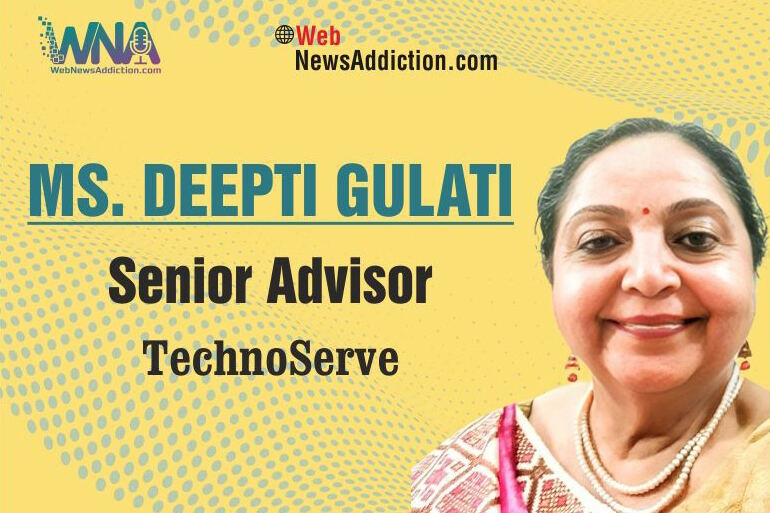
Ms. Deepti Gulati, Nutrition and Public Health Specialist and Senior Advisor at TechnoServe believes India’s nutrition architecture is currently in a constant state of evolution, gradually moving from calorie sufficiency to nutrient density, from welfare delivery to rights-based access, and from fragmented interventions to a more integrated and community-centered nutrition ecosystem.
“India’s nutrition journey is moving from calorie sufficiency to nutrient density, and from delivering food security to enhancing food and nutrition security,” says Ms. Deepti Gulati.
From Preventing Hunger to Building Nutrition Security
As India’s nutrition policies have become more comprehensive and multi-dimensional, increasing attention is also being placed on strengthening implementation systems at the community level. While national nutrition frameworks are broad and ambitious in scope, ensuring effective local execution remains a key priority in improving long-term outcomes.
According to Ms. Deepti Gulati, one of the most important areas of focus is strengthening multi-sectoral coordination across departments and institutions involved in nutrition delivery. Nutrition outcomes are influenced by multiple sectors including healthcare, education, agriculture, sanitation, food systems, trade, and social protection. Greater convergence across these sectors can help create more integrated service delivery systems and improve accountability across programmes.
At the local level, frontline implementation systems are also being strengthened through improved training, better infrastructure, and stronger institutional support. Expanding access to functional monitoring tools, storage facilities, digital tracking systems, and community-level nutrition infrastructure can significantly improve the effectiveness of service delivery.
There is also increasing emphasis on ensuring that nutrition programmes reach the vulnerable population more effectively and inclusively. Improved beneficiary identification systems and better data integration can help reduce exclusion errors and strengthen programme targeting, particularly for communities that remain underserved.
Ms. Gulati also highlights the importance of recognizing local dietary habits, socio-cultural realities, gender dynamics such as women often eating “last and least” within households, and community-level food practices while designing nutrition interventions. Community participation and localized planning can help improve programme acceptance and encourage stronger behavioural adoption at the grassroots level.
She notes that nutrition systems become more effective when national guidelines are supported by decentralized governance structures that allow local communities and institutions to adapt interventions to their specific realities and needs. The growing use of digital monitoring systems and real-time tracking platforms is also helping strengthen programme implementation by improving visibility, monitoring, and responsiveness across nutrition services.
“Nutrition interventions are most effective when policy frameworks and community realities are fully aligned,” explains Ms. Gulati.
Strengthening the Link Between Policy and Last-Mile Delivery
As India’s nutrition policies have become more comprehensive and multi-dimensional, increasing attention is also being placed on strengthening implementation systems at the community level. While national nutrition frameworks are broad and ambitious in scope, ensuring effective local execution remains a key priority in improving long-term outcomes.
According to Ms. Gulati, one of the most important areas of focus is strengthening multi-sectoral coordination across departments and institutions involved in nutrition delivery. Nutrition outcomes are influenced by multiple sectors including healthcare, education, agriculture, sanitation, food systems, trade, and social protection. Greater convergence across these sectors can help create more integrated service delivery systems and improve accountability across programmes.
At the local level, frontline implementation systems are also being strengthened through improved training, better infrastructure, and stronger institutional support. Expanding access to functional monitoring tools, storage facilities, digital tracking systems, and community-level nutrition infrastructure can significantly improve the effectiveness of service delivery.
There is also increasing emphasis on ensuring that nutrition programmes reach the vulnerable population more effectively and inclusively. Improved beneficiary identification systems and better data integration can help reduce exclusion errors and strengthen programme targeting, particularly for communities that remain underserved.
Ms. Gulati also highlights the importance of recognizing local dietary habits, socio-cultural realities, and household-level food practices while designing nutrition interventions. Community participation and localized planning can help improve programme acceptance and encourage stronger behavioural adoption at the grassroots level.
She notes that nutrition systems become more effective when national guidelines are supported by decentralized governance structures that allow local communities and institutions to adapt interventions to their specific realities and needs. The growing use of digital monitoring systems and real-time tracking platforms is also helping strengthen programme implementation by improving visibility, monitoring, and responsiveness across nutrition services.
Why Food Fortification Has Become a Major National Strategy
Food fortification has emerged as one of India’s most important nutrition interventions because it addresses hidden hunger at scale while remaining cost-effective, scientifically backed, and easy to integrate into existing food systems.
India suffers from a high burden of micronutrient deficiencies, especially those of iron, iodine, vitamin A, vitamin D, folic acid, and vitamin B12 across large sections of the population. Anaemia continues to affect more than half of women and children. Vitamin and mineral deficiencies remain prevalent across both rural and urban regions, and contribute to poor health outcomes, lower productivity, and intergenerational cycles of malnutrition and poverty.
For India, strengthening nutrition outcomes is also closely tied to realizing the full potential of its demographic dividend. A healthier and nutritionally secure population is critical for improving productivity, educational attainment, workforce participation, and long-term economic growth.
Food fortification addresses these challenges by adding essential micronutrients to commonly consumed staples such as wheat flour, rice, edible oils, milk, and salt. Since these foods are consumed regularly across households, fortification enables nutritional interventions to reach the population without requiring major dietary changes.
Fortified salt, often enriched with iodine and iron helps combat iodine deficiency disorders and iron-deficiency anaemia. Fortified edible oils and milk are commonly enhanced with vitamins A and D to support improved immunity and bone health, as well as reduce the risk of non-communicable diseases such as hypertension, diabetes and cancers. Similarly, fortified rice and wheat flour typically contain iron, folic acid, and vitamin B12 to improve haemoglobin levels, thus reducing wide-spread anaemia, reduce birth defects and improve overall nutritional status.
The Food Safety and Standards Authority of India (FSSAI) has established standards for fortified foods to ensure that nutrient levels meet defined dietary requirements and public health objectives. One of the biggest advantages of fortification is its scalability. Through the Public Distribution System (PDS), Integrated Child Development Services (ICDS), Mid-Day Meal schemes, and open-market channels, fortified staples are increasingly reaching millions of beneficiaries across the country.
Ms. Gulati notes that fortification represents a sustainable and affordable intervention compared to large-scale supplementation or medical treatment programmes. At the same time, she emphasizes that fortification is not intended to replace balanced diets or dietary diversity. Instead, it functions as a complementary strategy that supports broader nutrition goals.
Awareness generation also remains an important part of the process. Increasing consumer understanding about the benefits of fortified foods, strengthening quality compliance across states, improving monitoring systems, and promoting complementary nutrition education are all essential for ensuring long-term impact.
Ms. Gulati strongly feels that universalising fortification of staple foods is possible, only if food processing industry joins hand. She shared that her organisation: TechnoServe, plays a pivotal role in scaling-up staple food fortification in India by fostering industry-led collaborations. TechnoServe provides technical assistance and shares knowledge with the food industry partners to enhance their skills and expertise in areas such as quality assurance, manufacturing practices, so that they can adhere to the national FSSAI standards for staple food fortification. Through its initiatives like “Millers for Nutrition”, TechnoServe focuses on unlocking the market potential for all food processing industry partners; including the small and medium-sized millers; to adopt fortification. This helps to integrate fortified staples into the food safety net programmes as well as into the open market system, thereby addressing micronutrient deficiencies, holistically.
POSHAN Abhiyaan and the Push for Integrated Nutrition Governance
Programmes such as POSHAN Abhiyaan reflect India’s growing emphasis on convergence-based nutrition governance that brings together multiple sectors and delivery systems under a common mission framework.
One of the programme’s defining strengths lies in its focus on inter-sectoral convergence. Nutrition outcomes are closely linked with healthcare access, sanitation, maternal well-being, education, and community awareness. By encouraging collaboration between Departments such as Health, Women & Child Development, Water & Sanitation, and Education, POSHAN Abhiyaan seeks to create a more integrated and coordinated approach towards nutrition delivery.
Technology has also become an increasingly important pillar of implementation. The Poshan Tracker platform has helped modernize monitoring systems by replacing manual registers with real-time digital tracking tools. These systems support beneficiary monitoring, growth tracking, and prioritization of home visits by frontline workers.
Community participation remains another important component of the programme. Through the Jan Andolan framework, nutrition is being positioned not merely as a government scheme but as a broader social movement driven by awareness, behavioural change, and local participation.
Frontline workers including Anganwadi workers and Auxiliary Nurse Midwives (ANMs) continue playing a critical role in connecting nutrition services with families and communities. Their work includes nutritional counselling, maternal support, growth monitoring, awareness creation, and community outreach.
At the same time, strengthening implementation systems at the district and block levels continues to remain an important priority. Greater coordination across departments can further help reduce operational silos and improve the seamless delivery of nutrition services at the grassroots level.
As digital systems expand, improving internet connectivity, software functionality, and digital training for frontline workers can further strengthen the effectiveness of real-time monitoring platforms and implementation systems.
Ensuring that the vulnerable population are consistently reached through nutrition programmes also remains a key area of focus. Strengthening delivery systems, minimizing leakages, and improving programme targeting can help expand the reach of nutrition services among underserved communities, including the population living in urban slums and difficult-to-access regions. Continued investments in frontline capacity, infrastructure, and core nutrition services under programmes such as ICDS are also expected to further improve programme quality and service delivery outcomes over time.
As implementation systems continue evolving, programmes such as POSHAN Abhiyaan are steadily strengthening accountability, improving service delivery, and helping nutrition interventions become more targeted, technology-enabled, and outcome-oriented.
Why Multi-Sector Coordination Is Critical to Nutrition Outcomes
Nutrition governance today increasingly reflects the understanding that malnutrition cannot be addressed through isolated interventions alone. Nutrition outcomes are influenced by multiple interconnected factors including healthcare, sanitation, agriculture, food systems, education, water access, women’s empowerment, and social protection.
According to Ms. Gulati, effective coordination between Ministries, Departments, and development sector partners is therefore absolutely critical in strengthening nutrition outcomes across the country.
Integrated programmes often create stronger developmental outcomes because they address multiple determinants of nutrition simultaneously. Better coordination also helps improve efficiency by reducing duplication of efforts and enabling ministries to utilize shared infrastructure, transportation systems, monitoring mechanisms, and delivery networks more effectively.
Multi-sectoral coordination platforms further help align different stakeholders around common nutrition goals and national priorities. This ensures that nutrition is not treated solely as a healthcare concern, but as a larger development issue connected to economic growth, public health, education, and human capital development.
Ms. Gulati explains that stronger coordination also creates greater unity of action between different Departments, allowing sectoral initiatives such as school feeding programmes, agricultural diversification, sanitation missions, and healthcare interventions to work in a more harmonized manner.
As India continues strengthening convergence frameworks under programmes such as POSHAN Abhiyaan and Mission Poshan 2.0, nutrition governance is becoming increasingly integrated, collaborative, and systems-oriented.
Data and Digital Monitoring Are Reshaping Nutrition Policy
Data is increasingly becoming central to the way nutrition policies are designed, monitored, and implemented in India. Large-scale national surveys and digital monitoring systems are helping policymakers better understand nutrition trends while enabling more targeted interventions and improved resource allocation.
The National Family Health Survey (NFHS) continues to serve as one of the country’s most important evidence bases for nutrition policymaking. Data from NFHS-5 (2019-21) has helped highlight important trends across stunting, wasting, anaemia, obesity, and maternal-child health indicators. The survey showed that while stunting and wasting have declined gradually over time, India is also witnessing the emergence of a “double burden” involving rising obesity and lifestyle-related non-communicable diseases. These findings are increasingly shaping the country’s future nutrition priorities.
Digital platforms such as the Poshan Tracker are also transforming nutrition governance by enabling real-time monitoring of nearly 10 crore beneficiaries, including children and pregnant women. These systems support beneficiary tracking, district-level prioritization, and more efficient programme planning. Data from surveys such as the Household Consumption Expenditure Survey (HCES) is further helping institutions like NITI Aayog coordinate nutrition interventions across ministries and strengthen evidence-based resource allocation.
At the same time, India’s nutrition systems are steadily moving towards more integrated digital governance frameworks that connect healthcare, sanitation, nutrition, and social protection data to support more holistic planning.
Strengthening Data-Driven Nutrition Governance for the Future
As India’s nutrition systems continue evolving, strengthening data integration and real-time monitoring is becoming an increasingly important priority.
According to Ms. Gulati, improving the use of data can significantly strengthen programme implementation and help policymakers better understand regional variations in nutrition outcomes across the country. Efforts are now being directed towards expanding digital monitoring systems beyond Anganwadi Centres to include schools and healthcare facilities. Greater integration of datasets across ministries can also help create more unified nutrition dashboards and improve coordination across programmes.
There is additionally growing emphasis on improving survey frequency through lighter and more rapid assessment mechanisms that can complement large-scale surveys such as NFHS. Investments in training frontline workers are also helping strengthen the quality and accuracy of local-level data collection. Better data quality ultimately improves planning, implementation, and resource allocation across nutrition programmes. Emerging technologies such as AI-driven analytics and predictive modelling are expected to further strengthen India’s ability to identify malnutrition hotspots, forecast intervention needs, and proactively allocate resources where they are needed most.
Ms. Gulati believes that India is steadily moving towards stronger data-driven nutrition governance, although continued improvements in consistency, integration, and local-level coverage will remain important in realizing the full potential of these systems.
Partnerships Are Expanding the Reach of Nutrition Interventions
Partnerships involving governments, private sector organizations, development agencies, research institutions, and civil society groups are increasingly playing a transformative role in strengthening nutrition outcomes across India.
According to Ms. Gulati, these partnerships bring together innovation, technical expertise, financial resources, and implementation capabilities that complement government-led nutrition efforts. Private sector food companies are helping scale the fortification of staples such as rice, wheat flour, edible oils, and milk, ensuring wider accessibility and improved quality standards across food systems. Development agencies are also helping extend nutrition services into underserved and remote regions where implementation challenges may be greater.
Collaborative partnerships are further contributing towards innovation in areas such as biofortified crops, digital monitoring tools, supply-chain strengthening, and nutrition delivery systems. Organizations such as TechnoServe, GAIN. Nutrition International, PATH, World Bank, UNICEF and the World Food Programme, etc., have supported several data-driven and technology-enabled nutrition initiatives across the country, and are supporting programmes linked to POSHAN Abhiyaan and Mission Poshan 2.0.. Public-private partnerships and CSR-led initiatives are also helping mobilize additional investment for nutrition awareness campaigns, community outreach programmes, and implementation support.
Ms. Gulati emphasized upon the importance of ensuring affordability, transparency, accountability, and public-health alignment within all partnership frameworks so that nutrition interventions remain inclusive and accessible.
India’s Next Nutrition Priorities Will Shape Its Development Future
Looking ahead, India’s nutrition priorities are expected to increasingly focus on strengthening nutrition security rather than food security alone. The next phase of the country’s nutrition transformation will likely emphasize nutrient-dense food systems, preventive healthcare, stronger delivery infrastructure, and deeper integration between nutrition and broader development planning.
One of the major priorities for the coming decade will be promoting dietary diversification and reducing over-dependence on staple grains such as rice and wheat, just to assuage hunger. Future nutrition strategies are expected to increasingly integrate millets, pulses, vegetables, and animal proteins into programmes such as the Public Distribution System (PDS) and school meal initiatives. Fortification and biofortification of staples such as rice, milk, and edible oils are also expected to remain major priorities as India continues addressing micronutrient deficiencies at scale.
India’s nutrition systems are simultaneously adapting to new public health realities involving obesity, diabetes, and lifestyle-related non-communicable diseases. The 2024 ICMR-NIN dietary guidelines reflect a growing shift towards reducing salt, sugar, and ultra-processed food consumption while promoting healthier dietary practices. There is also increasing focus on prevention-led healthcare models that strengthen early nutrition counselling, growth monitoring, and primary healthcare interventions through systems such as Ayushman Arogya Mandirs. Mission Poshan 2.0 is expected to continue emphasizing the first 1,000 days of life, the critical period between conception and a child’s second birthday that significantly shapes long-term health and developmental outcomes.
India is also investing in stronger infrastructure and digital modernization across Anganwadi centres. Upgrading Anganwadi systems with improved facilities and technology support will remain important in expanding outreach and strengthening service delivery for marginalized communities. Future nutrition strategies are additionally expected to place greater emphasis on district-level planning that aligns interventions with local food cultures, agro-climatic conditions, and region-specific nutritional deficiencies. According to Ms. Gulati, India’s long-term economic and developmental future is deeply linked to the success of its nutrition systems.
“India’s demographic dividend can only translate into sustainable growth if the country’s population is healthy, nutritionally secure, and supported by strong delivery systems,” she says.
India’s evolving nutrition journey today reflects far more than a policy transformation. It represents a broader shift in how the country approaches public health, development, governance, and human capital. From strengthening food systems and fortification initiatives to building stronger data-driven governance and community-centered delivery mechanisms, India’s nutrition ecosystem is steadily becoming more integrated, future-ready, and outcome-oriented.
As India continues transitioning from hunger to health, its nutrition systems are steadily laying the foundation for healthier communities, stronger public health outcomes, and more resilient national growth.

1 Comment
Pingback: Satellite Internet in India: Who Will It Really Connect?