


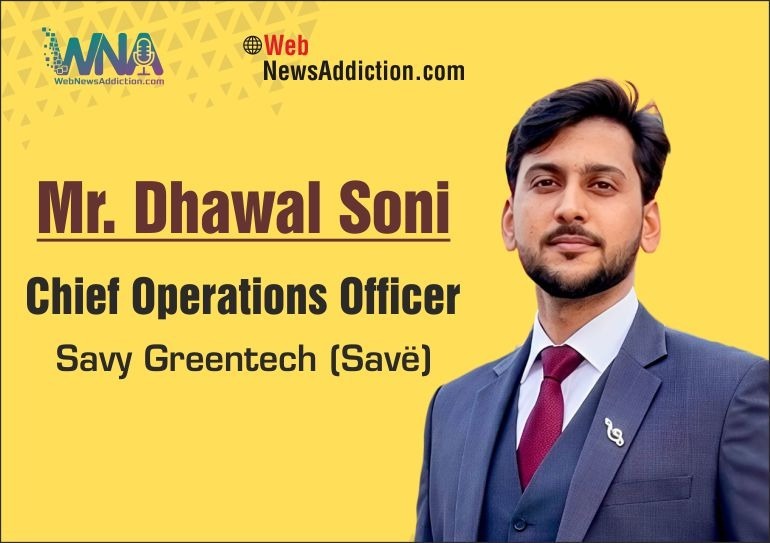
As India’s electric mobility landscape gathers pace, companies are increasingly shifting towards scalable, application-driven solutions. Savy Greentech, envisioned by its Director, Mr. Chandan Mundhra, is aligning itself with this transition by building a diversified EV portfolio tailored for real-world use across sectors such as hospitality, logistics, industrial campuses, and beyond. Mr. Dhawal Soni, COO, Savy Greentech says, “The company is strategically focused on accelerating growth within the EV ecosystem while delivering scalable solutions with strong ROI.”
Growth Priorities: Scaling with Purpose
At the core of Savy Greentech’s near-term roadmap is a clear emphasis on growth through product diversification, market expansion, operational excellence, and long-term value creation. The company is actively expanding its portfolio across electric golf carts, vintage carts, e-rickshaws, and e-loaders, with a strong focus on customization. These vehicles are being designed as application-specific solutions for sectors such as hospitality, industrial campuses, and last-mile logistics, where operational efficiency and real-world usability are critical.
Alongside this, Savy is scaling its market presence across regions and customer segments through strategic partnerships with OEMs, fleet operators, and channel partners. This approach is aimed at accelerating fleet electrification while strengthening its distribution network across urban and semi-urban markets.
Operationally, the company is investing in scalable manufacturing processes, robust supply chain systems, and standardized quality frameworks to ensure consistency while meeting rising demand. At the same time, there is a strong focus on customer-centricity, delivering reliable after-sales service, minimizing downtime, and optimizing total cost of ownership (TCO) to create long-term lifecycle value. As Mr. Dhawal Soni highlights, the broader vision remains aligned with promoting sustainable mobility solutions that support India’s transition towards a low-emission future.
Also Read: https://webnewsaddiction.com/lawyered-legal-tech-that-moves-at-the-speed-of-enforcement/
Innovation Pipeline: Building Next-Gen EV Platforms
Innovation remains central to Savy Greentech’s strategy, with its R&D pipeline focused on developing application-specific electric mobility platforms that emphasize performance engineering, modularity, and long-term reliability. “We are developing L5 category electric vehicles engineered for higher payloads and demanding duty cycles, with a strong focus on efficiency and real-world performance,” says Mr. Dhawal Soni.
These L5 vehicles are being built on reinforced chassis architectures designed to handle higher payload capacities and rigorous usage conditions. Engineering efforts include optimized powertrain configurations, improved load distribution, and enhanced suspension systems to ensure stability, safety, and superior ride quality, along with higher energy efficiency and extended operational range.
In parallel, Savy is developing an electric tractor platform, where the focus is on delivering high torque at low speeds, efficient power delivery for agricultural operations, and significantly reduced operating costs compared to conventional diesel systems. This involves robust drivetrain design, thermal management optimization, and adaptability across multiple farming applications.
On the industrial side, the company is building a comprehensive range of material handling and intra-facility mobility solutions, including inter-movement and VIP transport vehicles as well as platform trucks. These are being developed on scalable and modular platforms, enabling customization based on payload, range, and operating environments. Across all product lines, the emphasis on platform standardization and system-level optimization allows faster development cycles while maintaining flexibility. Integration readiness for advanced telematics and smart fleet management systems further supports data-driven operations at scale.
Demand Drivers: Commercial and Institutional Momentum
The next phase of demand for Savy Greentech’s EV portfolio is expected to be driven by commercial, institutional, and sector-specific mobility applications where electrification offers clear advantages in cost, efficiency, and sustainability. High-utilization segments such as last-mile logistics and urban transport continue to lead adoption, with e-rickshaws and e-loaders gaining traction due to their low total cost of ownership, high utilization rates, and quick return on investment. Mr. Dhawal Soni highlights that “high-utilization segments like last-mile logistics are seeing strong traction because EVs offer a clear advantage in operating costs and ROI.”
At the same time, sectors such as hospitality, tourism, and large campuses, including resorts, airports, industrial parks, and educational institutions are increasingly adopting electric mobility solutions for their silent operation, zero emissions, and enhanced user experience.
The industrial and warehousing sector is another key growth area, where material handling vehicles and platform trucks are being electrified to improve operational efficiency and reduce dependence on fossil fuels. In addition, the agricultural sector presents a strong long-term opportunity, particularly with the development of electric tractors.
Geographically, Tier 2 and Tier 3 markets are emerging as major growth centres, supported by increasing awareness, government incentives, and demand for cost-effective mobility solutions. Overall, demand is being shaped by high-utilization, cost-sensitive, and sustainability-driven use cases where EVs are becoming economically and operationally viable.
Expanding Beyond Metros: Unlocking Tier 2 and Rural Potential
Expansion into Tier 2, Tier 3, and rural markets is a key pillar of Savy Greentech’s growth strategy. These regions represent high-potential opportunities within the EV ecosystem, driven by cost sensitivity, rising fuel prices, and increasing demand for reliable, low-maintenance mobility solutions.
Adoption of e-rickshaws and e-loaders is accelerating rapidly in these markets, as operators prioritize lower operating costs, faster ROI, and reduced dependence on volatile fuel prices. As Mr. Soni points out, “These markets offer a compelling case for electrification, driven by cost sensitivity and the need for reliable, low-maintenance mobility solutions.”
In rural and semi-urban areas, there is also strong demand for application-specific and utility-focused vehicles such as electric loaders, platform trucks, and upcoming electric tractors. These applications require durable, high-performance vehicles capable of operating in demanding conditions.
Additional opportunities exist in institutional and community mobility use cases, including small industrial clusters, townships, temples, resorts, and local transport networks. To effectively serve these markets, Savy is focusing on building localized distribution and service networks, ensuring spare parts availability, strong after-sales support, and minimal downtime, factors that are critical for customer trust and adoption.
Strengthening the Backbone: Manufacturing, Localization, and Batteries
To support future demand, Savy Greentech is strengthening its manufacturing and supply chain capabilities through a scalable and future-ready ecosystem. The company is investing in modular production systems, process standardization, and lean manufacturing practices to ensure consistent quality while enabling efficient scale-up across multiple EV platforms.
Localization remains a strategic priority, with increasing domestic sourcing of critical components aimed at enhancing cost competitiveness and strengthening supply chain resilience in line with India’s broader manufacturing vision.
On the battery front, Savy follows a controlled outsourcing model with verified OEM partners, while retaining complete oversight on quality, specifications, and performance benchmarks. This approach allows the company to leverage specialized manufacturing expertise while maintaining strict quality control. The focus remains on application-specific battery integration and optimization to ensure reliability, safety, and long-term performance in real-world conditions.
New Frontiers: Institutional, Municipal, and Global Opportunities
Savy Greentech is also expanding its focus towards institutional mobility, municipal services, and export markets, all of which are emerging as key growth pillars. Institutional demand is being driven by large campuses such as hotels, resorts, airports, industrial parks, and educational institutions, where there is a growing need for reliable, low-noise, and zero-emission mobility solutions.
From a municipal perspective, there is a clear shift towards electrification of public utility vehicles. The company is already contributing to this transition through its electric garbage collection rickshaws, designed for efficient waste management, lower operating costs, and minimal environmental impact. This aligns with the broader push towards smart cities and sustainable urban infrastructure.
On the export front, regions such as Africa, Southeast Asia, and the Middle East present strong opportunities due to similar mobility needs, cost sensitivities, and operating environments. Savy’s focus on robust, customizable EV platforms enables it to cater effectively to these diverse international markets.
The Road Ahead
Looking ahead, Savy Greentech is entering a decisive growth phase marked by product innovation, capacity expansion, and deeper integration across its value chain. The upcoming launch of its next-generation L5 electric vehicle platform reflects a move towards more premium, high-performance mobility solutions.
At the same time, the company is expanding manufacturing capacity across plants to support rising demand and enable scalable growth. A key strategic milestone is the transition towards greater in-house component manufacturing, which will enhance quality control, reduce external dependencies, and strengthen overall operational efficiency. As Mr. Soni notes, “The company is entering a decisive growth phase, with a focus on scaling operations and building a more integrated, future-ready manufacturing ecosystem.”
Parallel advancements in electric tractors, industrial mobility solutions, and municipal vehicle deployments further highlight Savy’s intent to diversify across multiple high-impact segments while positioning itself for the next phase of EV growth.

1 Comment
Pingback: Clean Energy Is Transforming Rural India