



Thanjavur, long celebrated as the “Rice Bowl of South India,” has always stood at the intersection of heritage, knowledge, and innovation. Home to the iconic Brihadiswara Temple, a millennium-old symbol of engineering excellence and visionary design, the region continues to inspire new pathways of progress. Building on this rich legacy, SASTRA University is driving technology-led development from its techno-rural campus in Thirumalaisamudram.
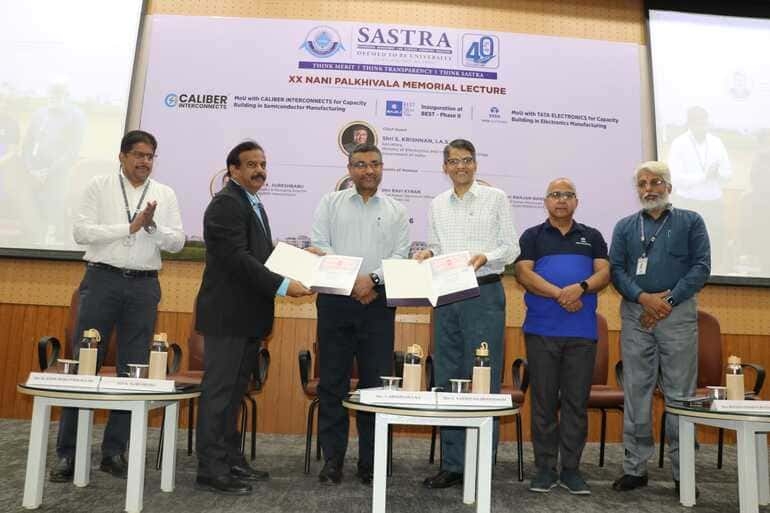
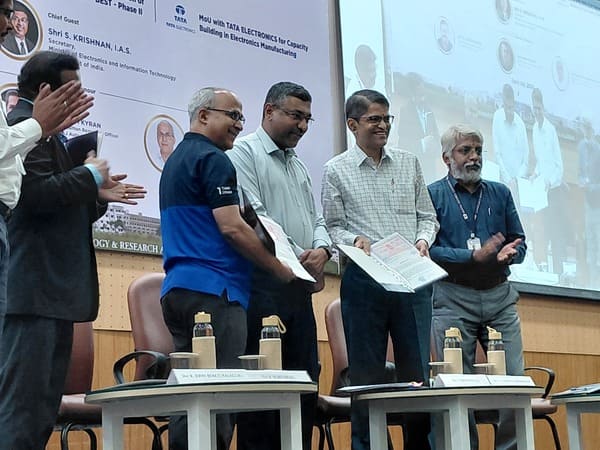
In a significant development for India’s electronics and semiconductor ecosystem, SASTRA University has signed separate strategic MoUs with Tata Electronics and Caliber Interconnects. The partnerships mark an important step toward creating a strong, industry-aligned talent pipeline to support the country’s growing semiconductor ambitions.
As part of these collaborations, SASTRA will introduce a BSc program in Electronics with Tata Electronics and an MSc program in Applied Electronics with Caliber Interconnects. Both programs are designed with deep industry integration, blending academic rigor with hands-on learning, real-world exposure, and structured internship opportunities.
Also Read: https://webnewsaddiction.com/new-agileda-software-simplifies-semi-eda-freeze-3-readiness/
The MoU signing ceremony in the august presence of Mr. S Krishnan, IAS, Secretary, Ministry of Electronics and Information Technology, MEITY, Government of India brought together leaders from government, industry, and academia, highlighting a shared commitment to strengthening India’s Electronics Systems Design and Manufacturing (ESDM) and Semiconductor manufacturing ecosystem. The occasion also marked the inauguration of state-of-the-art facilities on the SASTRA Thanjavur campus, including advanced laboratories for electronics manufacturing, firmware development, e-mobility, and semiconductor testing and packaging assembly lines. These facilities have been established with support from Bajaj Auto, Tata Electronics, and other industry partners.
Speaking at the event, Ranjan Bandyopadhyay, Chief Human Resources Officer highlighted Tata Electronics’ unique capability as a company operating across the entire semiconductor value chain—from design to chip manufacturing and device readiness. He emphasized the importance of building a resilient domestic ecosystem, drawing from lessons learned during global supply chain disruptions.
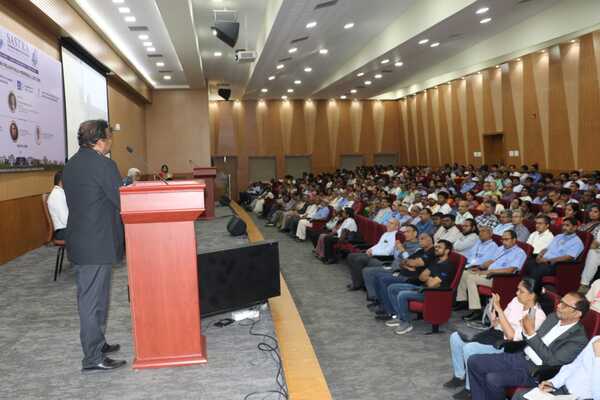
Addressing the gathering at the 20th Dr. Nani Palkhivala Memorial Lecture, Mr. S Krishnan, IAS, stressed upon the importance of integrating digital and physical infrastructure with skilling initiatives. He noted that India’s digital economy is projected to grow from 12% of GDP in 2021–22 to 20% by 2030, while electronics exports have already reached nearly USD 40 billion, with the potential for the sector to scale to USD 1 trillion by 2030.
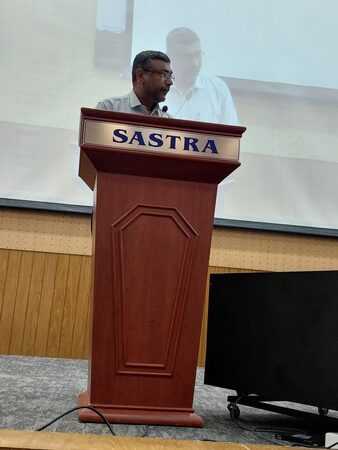
K Suresh Babu, Founder and Managing Director, CALIBER INTERCONNECTS described the collaboration as a transformative initiative aimed at bridging the gap between academia and industry. He stated that the MSc Applied Electronics program will feature a co-developed, industry-driven curriculum focused on semiconductor testing, advanced packaging, and chiplet assembly.
He further announced that Caliber Interconnects will extend comprehensive support through Hands-on training for students and faculty in silicon testing and packaging. Access to advanced packaging and substrate assembly facilities. Manufacturing-oriented learning experiences within real production environments. Structured internships and project-based industry engagement
Suresh also highlighted the challenges faced by Indian students abroad in securing internships, emphasizing the need to create world-class opportunities within India. He noted that SASTRA’s advanced infrastructure, experienced faculty, and forward-looking management position it as an ideal partner to develop globally competitive semiconductor talent aligned with national priorities.
Prof. S Vaidya Subramaniam, Vice Chancellor reaffirmed the university’s commitment to excellence and nation-building. He emphasized the transformation of India’s electronics sector from basic assembly to advanced manufacturing and highlighted SASTRA’s role in preparing students to contribute meaningfully to this evolution. He also acknowledged the contributions of industry partners in establishing cutting-edge infrastructure across Phase I and Phase II of the initiative.
This landmark collaboration stands as a model for industry-academia partnership, demonstrating how integrated efforts can accelerate capacity building in electronics and semiconductor manufacturing. It reinforces India’s vision of achieving technological self-reliance while creating a globally competitive workforce. SASTRA University is one of India’s leading institutions, known for its excellence in engineering, technology, and research, with a strong focus on innovation and industry collaboration.
