



Data center reliability is no longer just about keeping servers running. For an operator, risk can begin with a cut fence, an intruder approaching a substation, an alarm no one trusted enough to investigate, or a rack that ran hot overnight. The cause may be different, but the consequence is often the same: an interruption to operations that can be costly. More than half of significant data center outages can now cost a company over $100,000, and roughly one in five exceed $1 million, according to the Uptime Institute’s 2024 Annual Outage Analysis.
The industry often approaches data center protection in separate areas, with perimeter security handled by security teams, substation protection by facilities teams, and rack-level thermal monitoring and inspections by reliability engineers. For a VP of Operations responsible for overall uptime, however, these risks are closely connected. An issue that begins at the perimeter or power infrastructure can ultimately affect the same operational continuity as a problem inside the data hall.
Reliability, not another security line item
Perimeter detection, electrical monitoring, alarm management and rack inspections may be handled by different teams, but they have a common objective: identifying potential problems early and addressing them before they disrupt operations.
A security breach, for instance, may initially be treated as a perimeter issue. However, if an intruder reaches a substation or other critical infrastructure, the potential consequences extend to the facility’s overall uptime. The impact could include lost capacity, service interruptions and longer recovery times. Bringing these monitoring and protection measures into a more coordinated approach can give operators a broader view of risks across the facility while helping reduce gaps that can emerge when different departments manage their systems separately.
Also Read: LAPL Automotive Begins Construction of Unit IV, Secures Three New Vendor Codes
Following the risk from the fence inward
Data centers can have large, lightly staffed perimeters, with many facilities deliberately maintaining low-light environments to limit light pollution around the site. While this can benefit surrounding communities, it can also reduce the effectiveness of conventional cameras in dark conditions. Thermal imaging addresses this limitation by detecting the heat signatures of people and vehicles, allowing potential movement to be identified even in complete darkness. Early detection can give operators more time to assess a situation and respond before a potential threat moves deeper into the facility.
A layered security approach can combine multiple detection and verification technologies. Radar systems such as the FLIR R-190/R-290 can detect movement as it approaches or crosses the perimeter, while bi-spectral FH-Series AI thermal/visible cameras and Elara DX-Series thermal/visible PTZ cameras can help verify and track the activity. By combining information from multiple sensors rather than relying on a single alarm, operators can gain greater context to determine whether an event requires further action.
Those detections can feed into Flir Latitude VMS, giving the control room a common view of the event. Flir Nexus connects sensors and systems so that information gathered at the fence reaches the person responding.
Moving deeper into the property, the substation is one of the most important points of exposure. The equipment feeding power to the data halls is essential to the operation, yet it is often less visible than the systems inside the building.
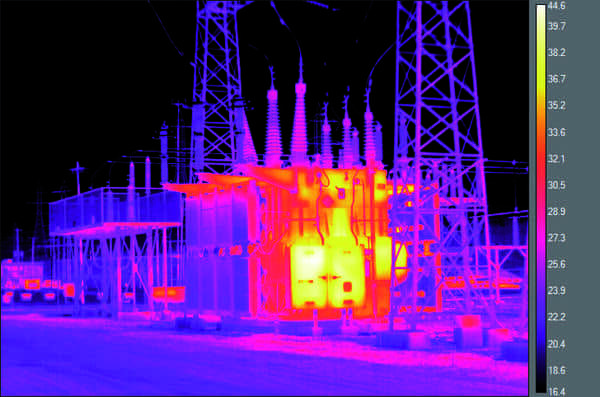
Fixed radiometric thermal cameras can continuously monitor transformers, electrical connections, and other energized equipment for abnormal temperature changes. While technicians could miss a loose or deteriorating connection during a visual inspection, an infrared camera detects the heat it produces well before the equipment fails. That allows the operations team to investigate and make repairs during a planned maintenance window rather than responding after an outage.
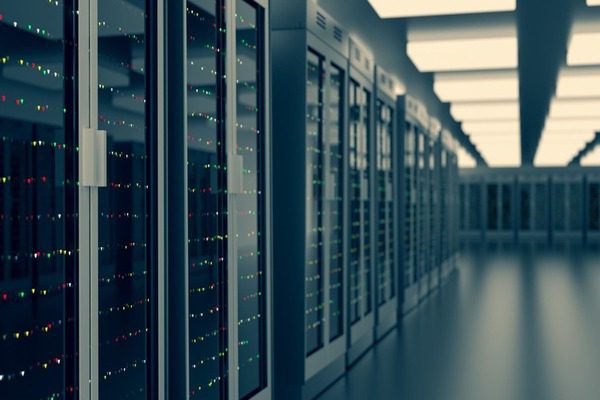
Inside the data hall, the available response time becomes even shorter. GPU-dense racks can draw several times the power of the traditional 8 to 12 kW rack, creating more heat in a smaller space. Under those conditions, a cooling issue or component failure that developed over several days could escalate within minutes.
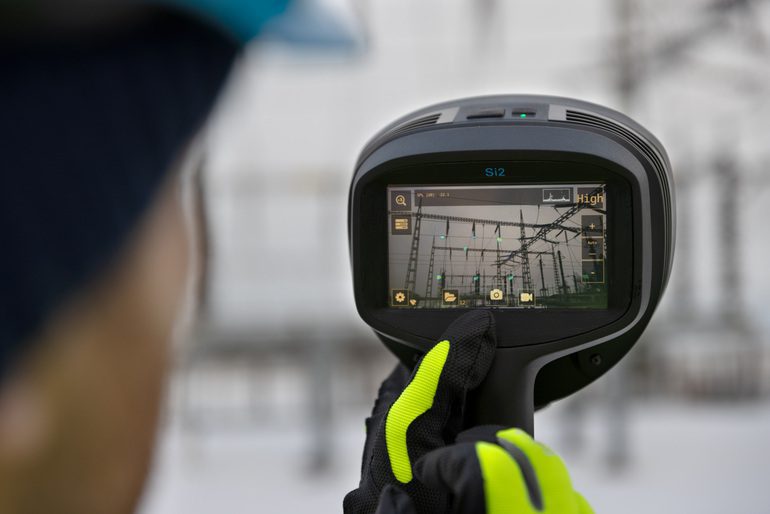
Periodic handheld inspections also play an important role, as they allow maintenance teams to view assets from multiple angles and distances. Fixed thermal monitoring provides visibility between scheduled surveys, while handheld tools with route-based inspection capabilities, such as the Flir i65 and Assetlink software, support more detailed inspections, analysis, and documentation when a potential issue is identified. Onboard tools such as reference imaging ensure these handheld inspections result in repeatable, trackable thermal data, making it easier to identify changes over time and support repair decisions. When combined with safety equipment such as infrared windows, maintenance teams can help maintain uptime by safely inspecting energized electrical equipment.
Also Read: Yamaha Scooters Get New Colours, Styling and Tech Upgrades
Two budgets, one operational problem
Security and operations are often managed separately, leading different teams to purchase thermal technology for different purposes. The security department may invest in thermal cameras for perimeter protection, while the operations team deploys thermal equipment for electrical inspections, early fire detection, and rack monitoring. Although these purchases are often made independently, they address closely related risks.
Simply put: the purchases come from different budgets because the organization is divided that way. The risk itself is not.
Grand View Research valued the data center physical security market at $1.87 billion in 2023 and projects it will reach $4.83 billion by 2030. Mordor Intelligence projects the thermal imaging systems market will grow from $5.78 billion in 2025 to $8.71 billion by 2031.
These may appear to be separate markets, but operators experience them as parts of the same uptime challenge. Both are intended to reveal developing issues, provide enough information to act, and prevent a larger disruption.
A more complete reliability picture
Compliance requirements are also moving operators towards a more coordinated approach. The 2023 edition of NFPA 70B placed greater emphasis on documented electrical maintenance and thermographic inspection. Inspection records, identified deficiencies, and corrective actions are increasingly part of the facility’s broader maintenance and audit process rather than being managed informally or in isolation.
None of this means operators need to replace systems that already work. It means they should view perimeter protection, power monitoring, interior surveillance, rack conditions, and compliance as part of a single reliability program.
Flir supports that full path, from radar and thermal detection at the perimeter to radiometric monitoring of critical equipment inside the facility. By connecting those capabilities, operators gain a clearer view of risk across the site and more time to respond before a condition escalates into an outage.
For most data center operators, the first step is not another purchase order. It is a change in perspective: seeing the path from the outer fence to the inner rack as one continuous reliability environment.
