



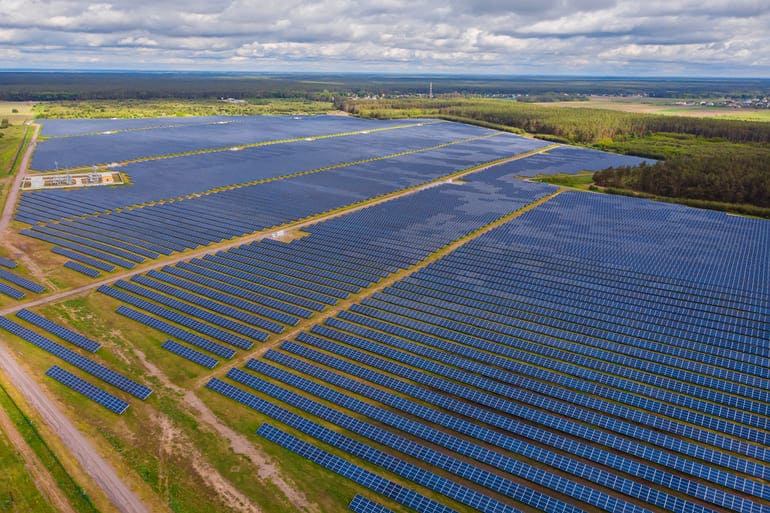
India’s solar story really is dazzling, and for once, that’s no exaggeration. By September 2025, the country blew past 125 gigawatts of solar capacity, growing so fast it left even the optimists scrambling to keep up. But the energy policy guiding this growth is still playing catch-up.
Sunlight is pouring onto rooftops and across deserts, but our rules and energy policy? They’re still fumbling for their sunglasses. The real question isn’t whether India can tap into the sun. It’s whether the country’s energy policy can keep up with all this light.
The Solar Boom: Blink and You’ll Miss It
India’s solar surge is just wild. By September 2025, solar installations hit 125.5 gigawatts, a whopping 53.7% jump in just a year. In only nine months, we added 26.6 gigawatts, most from big utility projects, with rooftop solar making up the rest. Even 2024 set records, with 24.5 gigawatts added. Altogether, India stacked up more than 31 gigawatts of non-fossil capacity in 2025 alone.
That’s a flood of sunshine. The only thing up in the air now: can India’s solar policy keep up, or will it buckle under the weight of its own success?
Overshoot Without Oversight: When Growth Outpaces Governance
In December 2025, the Ministry of New and Renewable Energy told banks to “exercise caution” with new loans to solar module makers, warning about a possible oversupply. We’re on track to make more panels than we can actually use. However, a few days later, the Ministry has clarified that clean energy funding isn’t going to be halted.
India’s solar growth is racing ahead, but policy keeps flip-flopping between “speed up” and “slow down.” This inconsistency reveals the core issue: India’s solar revolution is sprinting ahead, while regulation is still tying its shoes.
Why Smarter Solar Policy Matters Right Now:
1. Storage Matters: Solar Power Needs Backup
Solar energy works well during the day, but when the sun sets, that power disappears unless it’s stored. Without big batteries and smart grids, extra midday solar energy gets wasted, causing shortages in the evening. India must require storage in all new solar projects. It’s not optional, rather it’s essential. Otherwise, we’ll have sunny days but dark nights.
2. Recycle Now: Don’t Let Solar Waste Pile Up
Solar panels last 20 to 25 years, then they turn into waste. TERI says India could have 200,000 tonnes of solar trash by 2030. Right now, there is no clear plan for recycling or managing this waste. We can’t just swap coal pollution for piles of broken panels. A strong recycling law should force companies to take back and recycle old panels, keeping solar energy truly eco-friendly.
3. Equity & Access: Rooftop Solar for Everyone
Big corporations dominate India’s solar space right now, but households and small producers shouldn’t be left out. The PM Surya Ghar Yojana wants to double rooftop solar to reach 4 million homes by March 2026. That’s ambitious, but it only works with steady subsidies, fair buyback rates, and strong follow-through from states. A national framework could make the whole process smoother and more fair, so it’s not just gated communities or factories going solar.
4. Policy Clarity: We Must See a Real Plan
Policy uncertainty with sudden shifts from ‘accelerate now’ to ‘pause and reassess’ only unnerves investors. What renewable energy truly needs is consistent, transparent policy direction. It’s like having a GPS for solar energy and without it, we’re just going around in circles.
What India Can Do:
India should enact a comprehensive “Solar Sustainability Act” to integrate manufacturing incentives, waste recycling mandates, grid modernization, and equitable access provisions.
This Act could expand the existing ₹15,000 crore Production-Linked Incentive (PLI) scheme to further boost domestic solar panel production and supply chain resilience, while mandating BIS-certified standards for modules, inverters, and batteries under the 2025 Quality Control Order. For waste management, it would build on draft CPCB guidelines by requiring producers to register on the EPR portal, establish take-back systems, and recycle materials like silver and copper from end-of-life modules, targeting safe disposal of 600,000 tonnes by 2040.
Grid upgrades would prioritize infrastructure to integrate surging capacity that is currently at 129 GW and aiming for 500 GW non-fossil by 2030, unlocking stalled 43 GW projects through DISCOM reforms and storage integration. The PM Surya Ghar scheme could be expanded to reach 10 million households by 2027. This would include special subsidies for low-income and rural families, along with community solar projects and improved rules for selling extra power back to the grid.
No Plan, No Power: The Risk to Solar’s Future
Imagine it’s 2030, and India has so much solar energy that the power grid can’t handle the midday surge and breaks down, causing blackouts by evening. Meanwhile, a coal plant manager smiles and says, “I told you so.” It sounds funny, but it could really happen if policies don’t keep up with how fast solar is growing.
Questions You Should Be Asking:
- Where does the extra power go when the grid can’t handle it?
- Who’s in charge of recycling old panels?
- Are small rooftop producers getting a fair deal?
- How will India deal with the next wave of technology like perovskite and tandem cells without more policy chaos?
Here’s the thing: Energy transitions aren’t just about technology. They’re about smart, solid governance.
Sunlight Shines, But Policy Must Guide
India’s progress in solar energy is impressive, showing how determination can achieve great things. But relying on sunlight alone won’t be enough. Strong and clear policies are needed to make sure this boom doesn’t burn out.
Sources: Mercom India, Economic Times, Times of India, Ministry reports (2025)
