




India’s electric vehicle transition is often viewed through the lens of adoption. Sales are rising, new models are entering the market, and policy support has accelerated early momentum. Electric two-wheelers are becoming common in urban mobility, and passenger EVs are gradually gaining acceptance. By most visible indicators, the shift appears firmly underway.
Yet this view captures only the surface of a much deeper transformation. Beneath the growth in vehicles lies a more complex layer that will ultimately determine the strength and sustainability of this transition. Electric mobility is not driven by vehicles alone, but by the materials, supply chains, and systems that support them. EV materials such as lithium, cobalt, and nickel are central to this ecosystem and control over these inputs remains concentrated outside India. The real question therefore is not just how fast India adopts EVs, but how effectively it positions itself within this underlying structure.
When the Numbers Start to Hurt
In 2022, the global EV industry encountered a moment that forced a reassessment of long-held assumptions. Lithium prices surged dramatically within a short period, reversing years of steady cost reductions in battery technology. For an industry built on the expectation of declining costs, this shift exposed a structural vulnerability.
Batteries account for a significant share of an electric vehicle’s cost, and any fluctuation in material prices quickly translates into pressure on margins. Automakers across markets were compelled to respond through price adjustments, delayed launches, or renegotiated supplier agreements. In price-sensitive markets such as India, these pressures were particularly difficult to absorb, highlighting how dependent the ecosystem remains on external factors.
Policy Shifts and Market Response
India’s EV market has evolved alongside strong policy support, but recent adjustments have revealed how closely growth is tied to incentives. Changes in subsidy structures under FAME II led to immediate price increases in certain segments, particularly electric two-wheelers. The result was not a collapse in demand, but a noticeable recalibration.
This phase served as a reminder that policy can accelerate adoption, but it cannot fully shield the market from cost realities. Companies were required to reassess pricing strategies, cost structures, and long-term positioning. The focus began to shift from short-term expansion to sustainable competitiveness, bringing greater attention to supply chains and materials.
How Industry Is Responding
As these pressures became more visible, differences in strategy across companies began to emerge. Some organizations had already started moving towards greater integration, while others began to adapt in response to changing conditions.
Companies such as Tata Motors have expanded their involvement across the ecosystem, building capabilities that extend beyond vehicle manufacturing. This includes investments in adjacent areas that strengthen control over critical inputs and reduce exposure to volatility. At the same time, players like Ola Electric and Ather Energy have focused on localization and technological capability, particularly in areas such as cell manufacturing and system integration. Meanwhile, Reliance Industries has taken a broader approach, investing across energy and materials, signalling the importance of upstream participation.
Despite these movements, a significant part of the ecosystem remains cautious. The scale of investment required, combined with uncertainty around evolving technologies has led many businesses to adopt a more measured approach.
Energy Systems and the New Layer of Demand
Electric mobility is placing new demands on the energy systems that support it. Each EV becomes part of a larger network that must generate, store, and distribute electricity efficiently. This is expanding the role of renewable energy and introducing new layers of complexity in how power is managed.
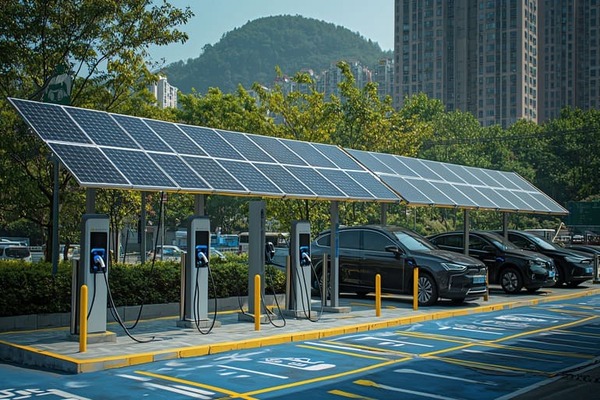
Charging infrastructure is increasingly linked with decentralized energy sources, energy storage solutions, and intelligent load management systems. This convergence of mobility and energy is creating new areas of capability, where expertise in electrical systems, software, and infrastructure becomes essential. For businesses, the opportunity lies in recognizing this intersection. As energy and mobility become more closely integrated, value is beginning to emerge in areas that were previously considered separate.
The Supply Chains Behind the Transition
The EV ecosystem depends on a network of supply chains that extend far beyond vehicle assembly. Components must move across regions under controlled conditions, often requiring specialized handling and storage. Batteries, in particular introduce new requirements that differ significantly from traditional automotive logistics.
This is transforming supply chains into a more strategic function. Companies that understand the evolving demands of handling, storage, and distribution are beginning to build differentiated capabilities. What was once seen as a supporting activity is now becoming central to operational resilience and efficiency.
Recycling and the Emergence of Circular Value
As EV adoption increases, attention is gradually shifting towards what happens at the end of a battery’s lifecycle. Recycling offers a pathway to recover valuable materials and reintroduce them into the supply chain, reducing dependence on imports. For India, this presents a unique opportunity. While the country may have limited natural reserves of key materials, it can build strength in recovery and processing. This creates the foundation for a circular value chain, where materials are reused rather than continuously sourced from external markets.
Businesses that invest in these capabilities are positioning themselves within a segment that is likely to grow in importance over time.
India’s Opportunity in the Global EV Supply Chain
India’s role in the EV transition extends beyond domestic consumption. The larger opportunity lies in integrating into global supply chains that support EV production worldwide. This includes supplying components, processing materials, and offering engineering and technological capabilities.
Moving into these areas allows businesses to participate in global markets without being limited to end-product manufacturing. It also creates more stable and scalable avenues for growth, particularly in segments where demand is expanding internationally. The real opportunity is to move beyond consumption and become part of the global value chain that powers the EV industry.
From Growth to Strategic Positioning
As the ecosystem evolves, the conversation is shifting from expansion to positioning. The question for businesses is no longer limited to participation in EV growth, but extends to where and how value can be secured within the broader system. This requires a more deliberate approach to capability building, partnerships, and investment decisions. Acting too early carries risk, but waiting too long may result in missed opportunities. The balance lies in identifying areas where long-term value is likely to concentrate and aligning strategy accordingly.
The Real Question India Must Answer
India’s EV journey has made significant progress, but its long-term success will depend on factors that go beyond adoption. The transition is gradually moving towards a stage where resilience, control, and strategic positioning will define outcomes.
Can India move from being a consumer of EV technology to a participant that shapes its underlying systems? Can businesses reduce exposure to global volatility while remaining competitive? And can the ecosystem evolve towards greater self-reliance without losing momentum?
These are no longer abstract questions. They are central to how the next phase of growth will unfold. The EV transition is ultimately about control as much as it is about mobility.
Those who recognize, where value resides and act with clarity and intent will define their position within this evolving landscape.
The views expressed in this piece are based on market data, industry trends, and discussions with stakeholders across India’s electric mobility ecosystem.
