



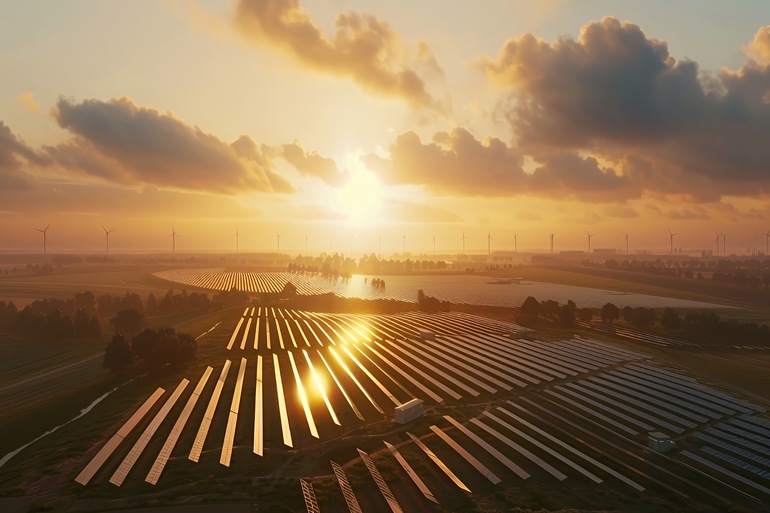
India’s renewable energy transition has reached a defining moment. Over the past decade, the country has successfully built one of the world’s fastest growing clean energy portfolios, with installed renewable capacity nearing 200 gigawatts and solar power alone expanding more than eightfold since 2015. This phase of growth has been driven by strong policy support, competitive market mechanisms, and sustained investment momentum, positioning India as a central player in the global energy transition.
However, as renewable energy begins to occupy a larger share of the power mix, the nature of the challenge is shifting. The question is no longer limited to how much clean energy India can generate or how quickly it can expand capacity. Instead, the focus is turning towards how effectively this energy can be integrated, balanced, and utilized within a system that must operate in real time.
This transition introduces a more complex layer of system dynamics. Variability in solar and wind generation, differences between supply and demand patterns, and evolving grid conditions are beginning to influence how efficiently renewable energy can be absorbed. These factors are not constraints in the traditional sense, but indicators of a system that is maturing and entering a more advanced phase of operation.
For businesses, policymakers, and market participants, this shift has important implications. It changes where value is created within the energy ecosystem. It elevates the role of flexibility, market design, and demand behaviour. And it reframes the energy transition from a question of capacity expansion to one of system optimization. It is within this context that India’s renewable energy journey must now be understood, not just as a story of growth, but as a system learning how to use power at scale.
The Hour When Clean Energy Becomes Hard to Use
On a typical summer afternoon in states such as Rajasthan, solar plants generate large amounts of electricity, but demand from homes and industries is relatively lower. Later in the evening, when people return home and electricity use rises sharply, solar generation drops as the sun sets. At that moment, India is producing some of its cheapest and cleanest power. Yet, paradoxically, not all of it can be used. In certain instances, grid operators are forced to reduce the flow of this electricity, not because it is unwanted, but because the system cannot absorb it at that time.
A few hours later, as the sun begins to set, the situation reverses. Homes switch on air conditioners, lights come alive across cities, and industrial activity picks up pace. Electricity demand surges sharply often by 30 to 50 percent compared to midday levels, according to grid data from the Central Electricity Authority. But solar generation fades just as quickly as demand rises. The system now faces a different kind of pressure. This contrast between surplus and scarcity within the same day captures the core of India’s evolving energy challenge. The country is no longer struggling to produce renewable energy at scale. It is learning how to use it at the right time.
A decade of Rapid Growth and a New Kind of Question
India’s renewable energy journey over the past decade has been defined by speed and scale. Installed renewable capacity has grown to nearly 190 to 200 GW, with solar power alone crossing 80 GW, compared to less than 10 GW in 2015. Competitive auctions, falling technology costs, and consistent policy support have turned India into one of the world’s fastest growing clean energy markets. This expansion has answered a question that once seemed uncertain: Can a large economy build renewable energy at scale? The answer is now clearly yes.
But success has introduced a more complex question. What happens when large volumes of renewable energy begin to interact with a power system that was designed for predictable generation? The answer is not immediately visible in capacity numbers, but it becomes evident in how the system behaves.
When Clean Energy is Available but cannot always be used
One of the most telling signs of this transition is renewable energy curtailment. In states such as Rajasthan, Tamil Nadu, and Karnataka, there are periods when solar or wind power generation exceeds what the grid can accommodate. In these moments, some of the available clean energy is deliberately reduced.
Estimates from system studies suggest that curtailment in renewable-rich states such as Rajasthan, Tamil Nadu, Karnataka, and Gujarat can range from around 2 to 5 percent annually, with higher levels during peak generation periods. It helps to think of this not as wasted energy, but as untapped potential. The system has the ability to generate clean electricity, but it does not always have the flexibility to use it when it is produced.
The Limits of Moving Electricity Across the Country
India has made substantial investments in strengthening its transmission network. Interstate transmission capacity has expanded to over 100 GW and initiatives such as green energy corridors have improved the ability to move renewable power from resource rich states to demand centres. These developments have been critical in addressing geographic imbalances. Electricity generated in renewable-rich states such as Rajasthan, Gujarat, and Tamil Nadu can now be transmitted more efficiently to high-demand states such as Maharashtra, Uttar Pradesh, and Delhi, where electricity consumption is consistently higher due to dense population, urbanization, and industrial activity.
However, transmission solves the problem of distance, not timing. Electricity must still be consumed at the moment it is generated unless it is stored. This creates a structural limitation in a system where solar output peaks in the middle of the day, while demand often peaks in the evening. Even a highly connected grid cannot eliminate this mismatch on its own.
A System Learning to Balance Time, Not Just Supply
As renewable energy becomes a larger part of the energy mix, the system is being pushed to adapt in new ways. According to the International Energy Agency, systems with higher shares of renewable energy increasingly depend on flexibility rather than additional capacity. In practical terms, this means the system must respond quickly to changes in generation and demand. It must find ways to shift electricity across hours, not just across states. This is where the story becomes less about infrastructure and more about coordination. Millions of individual decisions from industrial operations to household consumption begin to influence system efficiency.
Why Prices Matter More than Ever
One of the least visible but most important parts of this transition lies in how electricity is priced. In India, most electricity is still sold through long term contracts with fixed tariffs. While this structure has supported investment and growth, it does not always reflect real time conditions. Electricity exchanges account for only about 7 to 8 percent of total electricity consumption, according to regulatory data. This means that the majority of consumers do not experience price signals that change based on supply and demand during the day.
If electricity were cheaper during midday when solar generation is abundant and more expensive during peak evening hours, consumption patterns could gradually adjust. Without such signals, demand remains relatively fixed even as supply fluctuates. The result is a system that absorbs variability through curtailment or backup generation rather than through dynamic adjustment.
Storage as a Bridge between Two Different Moments
Energy storage offers a way to connect the surplus of the afternoon with the demand of the evening. Battery systems and pumped hydro projects can store electricity when it is abundant and release it when it is needed. India is beginning to invest in this space, with projections suggesting the need for tens of gigawatts of storage capacity by 2030. Some estimates indicate requirements of around 27 GW or more of battery storage to support renewable integration. However, storage depends on how the system values electricity at different times. Without clear price signals, its role remains limited. It is not just an infrastructure solution, but part of a broader system of coordination.
The Untapped Power of Changing When We Consume
One of the most underutilized opportunities lies on the demand side. India’s electricity consumption is expected to grow significantly, particularly due to rising cooling demand. The International Energy Agency projects that cooling demand could increase several times by 2030. If demand remains rigid, peak load stress will intensify. However, if consumption becomes more flexible through time-based pricing, smart technologies, and industrial load shifting, it can help balance renewable variability. Even small shifts in consumption timing, when scaled across millions of users can reduce system stress and improve the utilization of clean energy.
A Transition from Building to Understanding
India’s renewable energy transition has reached a stage where capacity growth is only part of the story. The deeper transformation lies in how the system responds to electricity in real time. The focus is shifting from building more to using better, from adding capacity to improving coordination, and from infrastructure to intelligence. This does not diminish the achievements of the past decade. Instead, it builds on them, because the scale that India has already achieved is precisely what makes this next phase both necessary and possible.
The Question That Will Define the Next Decade
As India continues to expand its renewable energy capacity, the defining question is changing. It is no longer just about how much clean energy can be produced. It is about how effectively that energy can be used when it matters most. The answer will shape the efficiency, reliability, and sustainability of the power system for years to come.
In many ways, the most important part of India’s energy transition is no longer visible in solar parks or transmission lines. It is unfolding in how generation, demand, and system behaviour come together in real time. That alignment will define the next chapter of India’s clean energy journey.
