



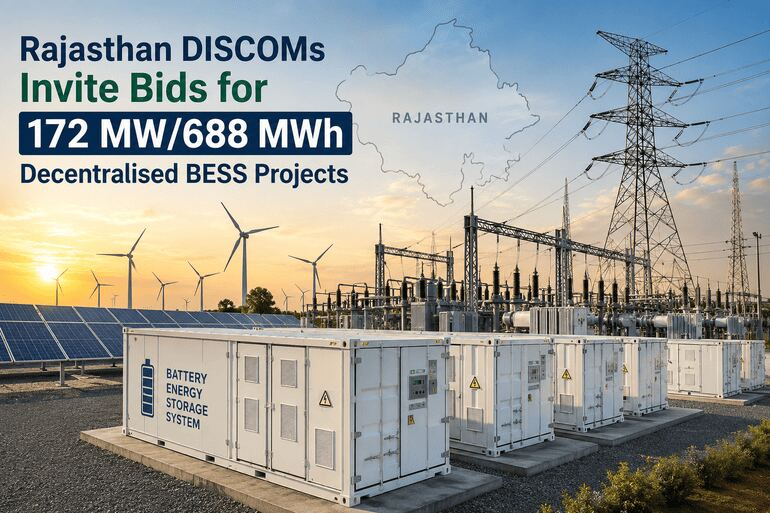
Rajasthan has taken another significant step towards modernizing its electricity distribution network, with the state’s three power distribution companies (DISCOMs) inviting bids to develop 172 MW/688 MWh of decentralized Battery Energy Storage System (BESS) projects.
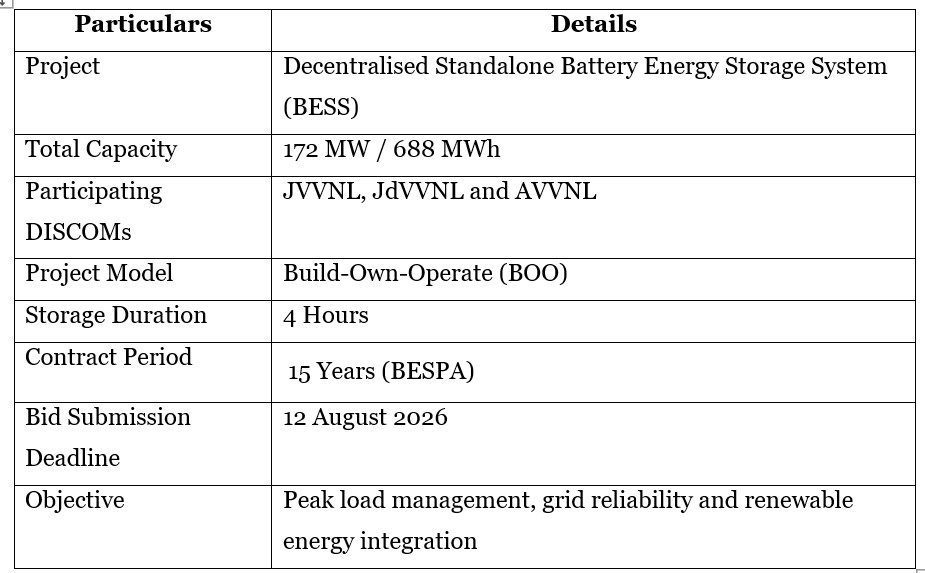
The initiative aims to improve grid reliability, manage peak electricity demand and support the growing share of renewable energy in the state’s power mix. The projects will be developed under the Build-Own-Operate (BOO) model, enabling private developers to finance, build, own and operate the battery storage systems while providing energy storage services under long-term agreements.
The bid submission deadline is 12 August 2026.
Key Tender Highlights
Tender Split Across Three DISCOMs
The statewide programme has been divided among Rajasthan’s three power distribution companies:
- Jodhpur Vidyut Vitran Nigam Limited (JdVVNL): 150 MW / 600 MWh
- Jaipur Vidyut Vitran Nigam Limited (JVVNL): 12 MW / 48 MWh
- Ajmer Vidyut Vitran Nigam Limited (AVVNL): 10 MW / 40 MWh
Together, the three tenders account for 172 MW/688 MWh of battery energy storage capacity, making it one of Rajasthan’s largest decentralized energy storage initiatives to date.
Also Read: https://webnewsaddiction.com/eodev-baudouin-sofc-distributed-power/
How Battery Energy Storage Systems Improve Grid Reliability
As Rajasthan continues to add more solar and wind power to its electricity mix, maintaining a stable and reliable grid has become increasingly important. Renewable energy generation fluctuates with weather conditions and time of day, while electricity demand often peaks during the morning and evening.
Battery Energy Storage Systems (BESS) help address this challenge by storing excess electricity when generation is high and supplying it back to the grid when demand increases. This improves grid flexibility, reduces stress on the electricity network and supports greater integration of renewable energy.
Also Read: https://webnewsaddiction.com/tata-power-seci-pumped-storage-project/
JVVNL Pilot to Demonstrate Distribution-Level Storage
Among the three tenders, the 12 MW/48 MWh JVVNL project will serve as a pilot for decentralized battery storage connected to 33/11 kV substations. The project includes 12 battery systems, each with a capacity of 1 MW/4 MWh, strategically located across the distribution network to support local grid operations and improve power quality. Under the BOO model, the selected developer will enter into a 15-year Battery Energy Storage Purchase Agreement (BESPA) with Rajasthan Rajya Vidyut Utpadan Nigam Limited (RUVITL), acting on behalf of the participating DISCOMs.
Built for Peak Demand Management
Each battery system will provide a four-hour discharge duration, enabling electricity to be supplied during periods of high demand.
The storage systems are expected to support the grid primarily during:
Evening peak: 6:00 PM–10:00 PM
Morning peak: 6:00 AM–8:00 AM
They may also be dispatched on demand based on the operational requirements of the respective DISCOMs.
The batteries are expected to complete at least 6,300 charge-discharge cycles over the 15-year contract period while maintaining the required technical performance standards.
Utilities to Provide Charging Energy
A key feature of the JVVNL pilot is that the respective DISCOMs will supply charging electricity to the Battery Energy Storage System Developer (BESSD) throughout the contract period. The utilities will also provide the initial charging power required for commissioning and testing before commercial operations begin.
Forecasting, scheduling and dispatch responsibilities will remain with the DISCOMs, allowing developers to focus on operating and maintaining the battery systems.
Boosting Rajasthan’s Energy Storage Ecosystem
The 172 MW/688 MWh programme is expected to create opportunities for battery manufacturers, EPC contractors, system integrators and renewable energy developers as India continues to expand its energy storage capacity.
Beyond strengthening Rajasthan’s electricity network, the initiative reflects the growing role of battery storage in enabling a cleaner, more flexible and resilient power system. As renewable energy deployment accelerates across the country, decentralized BESS projects such as these are likely to become an increasingly important part of India’s energy transition.
