




Researchers from VNR Vignana Jyothi Institute of Engineering & Technology (VNRVJIET), Hyderabad, in collaboration with the Indian Institute of Millets Research (IIMR), have secured an industrial design patent for an indigenous Millet Rotimaker, an automated roti-making machine designed specifically for millet-based rotis. The innovation aims to make millet-roti preparation faster, easier and more convenient for Indian households, addressing one of the practical challenges that can limit the regular consumption of millet-based foods.
With the Government of India promoting ‘Shri Anna’ (millets) as part of a broader global food movement through initiatives led by ICAR-IIMR and the International Year of Millets campaign, interest in millet-based diets has been growing. However, the time- and labour-intensive process involved in preparing millet rotis continues to pose a challenge for everyday adoption. The Millet Rotimaker seeks to bridge this gap by bringing greater convenience to millet consumption while advancing indigenous food-processing technology.
The research focuses on developing a more affordable automated Millet Rotimaker to reduce the time and manual effort involved in millet-roti preparation. Recognizing the potential of the innovation, NUTRI-Hub, the incubation hub of the Indian Institute of Millets Research (IIMR), provided INR 3 lakh in funding for prototype and design development. The collaboration combines VNR VJIET’s engineering and technology expertise with IIMR’s specialized knowledge in millet research and innovation, supporting the development of a Millet Rotimaker aimed at making millet-based foods more convenient and accessible.
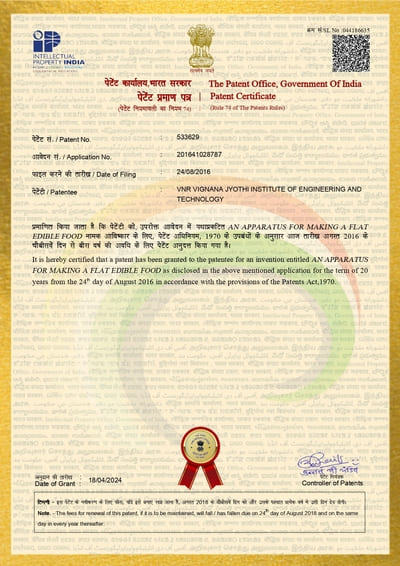
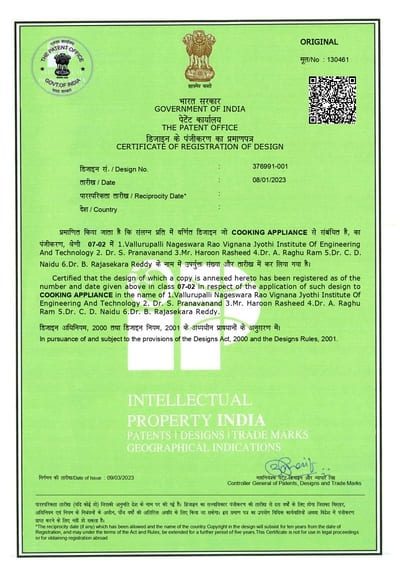
The research has resulted in 3 patent applications, of which two have already been granted, including the latest Industrial Design Patent granted in 2026. Led by Pranavanand Satyamurthy, the research focuses on developing a machine that can automate key stages of millet dough preparation and roti making. The researchers aim to bring the eventual cost of the machine to approximately INR 40,000, representing a reduction of nearly 60% from the current approximately INR 1.5 lakh price point of comparable automated roti-making machines in the market.
Also Read: Elektrotec 2026 Lights Up Coimbatore with India’s Next Wave of Electrical Innovation
The innovation addresses a key practical challenge in the wider adoption of millets. While millets are being preferred for nutritional benefits and as a potential alternative to conventional grains, preparing a millet-based dough and roti can be considerably more labour-intensive than preparing conventional wheat rotis. Millet dough needs multiple tapping and more pressure to achieve the required consistency and texture, with the process requiring approximately 50 repetitions per piece. This makes preparation time-consuming and physically demanding, particularly for households seeking to include millet-based foods in their regular diets.
The automated solution can reduce the manual effort and time involved in preparing millet rotis. The researchers are also keeping the nutritional factor into consideration; the machine would be convenient while maintaining the nutritional benefits of millet rotis. The prototype is designed to automate the dough preparation and roti-making process, with the broader objective of making millet-based foods more convenient, consistent and accessible.
Also Read: BPE Strengthens Energy Storage Commitment on Akshay Urja Diwas
Pranavanand Satyamurthy, Lead Researcher & Head of the Department of Electronics and Instrumentation Engineering, VNR VJIET, said: “While millets have strong nutritional value and growing consumer acceptance, preparing millet-based rotis at home remains a labour-intensive process because of the unique properties of millet dough. Our work with IIMR is focused on translating this challenge into an engineering solution, developing an indigenous automated system that can handle the complexities of millet dough while delivering consistent, convenient roti preparation. We see this not merely as a machine, but as an enabling technology that can help accelerate the adoption of millets in everyday Indian diets.”
VNR VJIET has provided dedicated space for the research team to undertake experimentation, research, design development, testing and refinement of the technology. The collaboration between VNR VJIET and IIMR brings the spotlight on the potential of academic research, incubation support and engineering innovation to come together to address practical challenges in India’s food and nutrition ecosystem.
