


India’s manufacturing sector is at a pivotal inflection point, where digitalization, sustainability, and resilience are no longer optional but essential for global competitiveness. As Industry 4.0 reshapes factory floors, the key question facing manufacturers is how can technology adoption translate into real, scalable impact on productivity and efficiency.
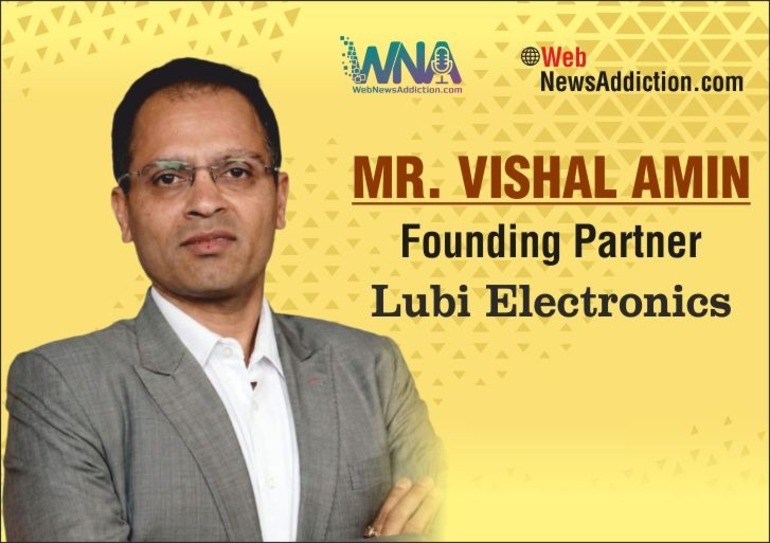
In this exclusive conversation with Web News Addiction, Mr. Vishal Amin, Founding Partner, Lubi Electronics, shares how the company is enabling India’s transition towards smart, connected, and sustainable manufacturing. From automation and IIoT to AI-driven software, renewable energy integration, and semiconductor-ready solutions, Lubi Electronics outlines its strategic approach to building future-ready industrial ecosystems aligned with India’s growth ambitions.
Edited Excerpts Below:
- How is Lubi Electronics supporting the growth of Industry 4.0 in India’s manufacturing sector?
At Lubi Electronics, Industry 4.0 is not viewed as a buzzword but as a practical transformation roadmap for Indian manufacturing. We support this transition by enabling connected, data-driven, and resilient operations through automation, IIoT, smart control panels, motion systems, and digital monitoring solutions.
Our focus is on plant digitization, predictive maintenance, energy optimization, and real-time decision-making, helping manufacturers improve productivity while maintaining operational reliability and sustainability.
- How does Lubi balance standardized products versus tailored solutions across sectors like automotive, energy, and manufacturing?
Our strategy is built on a modular standardization approach. We offer globally proven, standardized products for scalability and reliability, while layering application specific customization through engineering, configuration, and integration services.
This allows us to meet diverse sector needs, whether it’s high-speed automotive automation, energy-efficient solar applications, or flexible manufacturing systems, without compromising quality, compliance, or delivery timelines.
- How does Lubi approach strategic partnerships to enhance its product ecosystem?
Strategic collaborations are central to Lubi’s growth philosophy. We partner with technology leaders such as Delta, Panasonic, Hiwin, Epson, Advantech, Moxa and other global industrial innovators to build a future-ready ecosystem.
Our partnerships are guided by three principles: technology relevance, long-term reliability, and customer value creation. We always believe in offering products with reliable solutions, integrated platforms, and jointly addressing evolving industrial challenges.
- How is Lubi aligning its portfolio with India’s sustainability and green technology goals?
Sustainability is deeply embedded in our portfolio strategy. Through solar EPC projects, energy efficient motion systems, smart power management, and EV ready components, we actively support India’s green manufacturing and renewable energy initiatives.
Our solutions are designed to reduce energy consumption, minimize downtime, extend equipment life, and lower carbon impact, helping customers achieve both regulatory compliance and long-term operational sustainability.
- How do software solutions like Computer Vision, AI, and SCADA development support industrial operations and plant productivity?
Our software solutions help industries address critical operational challenges by improving safety, efficiency, and overall plant performance. Computer Vision and AI provide real-time visibility into safety compliance, quality defects, and process deviations, enabling early issue detection and reducing unplanned downtime. SCADA development services deliver customized automation, testing, and monitoring systems designed around specific industrial processes.
These solutions enable accurate data acquisition, clear dashboards, and actionable analytics for informed decision-making. As a result, operations experience reduced safety risks, lower production losses, optimized resource utilization, and improved productivity. The combined impact strengthens operational reliability, supports continuous improvement, and delivers measurable long-term value across industrial environments.
- How does Lubi promote and offer solutions for the Automotive and Semiconductor sectors in India?
Lubi engages the Automotive and Semiconductor sectors in India through a solution driven, consultative approach rather than event led outreach. We work closely with OEMs, Tier suppliers, and system integrators to understand their production challenges, compliance requirements, and scalability needs. By offering application specific automation, power distribution, control panels, machine vision, and digital manufacturing solutions, we help customers improve quality, uptime, and operational efficiency.
Our focus is on early-stage technical discussions, on site assessments, pilot implementations, and long term partnerships, ensuring our solutions are aligned with India’s evolving Automotive and Semiconductor ecosystems, including EV manufacturing, precision assembly, traceability, and high reliability operations.
- What are Lubi Electronics’ key innovation priorities for the next 12–18 months?
Our innovation roadmap focuses on:
- Smart control panels with diagnostics and remote monitoring;
- AI and data enabled software solutions;
- Energy efficient and compact system designs;
- Localized engineering and faster customization capabilities;
- Robotics Integration in Manufacturing Facilities;
- EV centric motion and sensing technologies;
- Renewable Energy Projects for a Green Future;
- Supporting the Future of Semiconductor Manufacturing In India.
These priorities are aimed at building resilient, intelligent, and scalable industrial systems for India’s next phase of manufacturing growth.
- What initiatives has Lubi put in place to strengthen end-to-end customer experience?
We view customer experience as a lifecycle commitment. Lubi has strengthened its PAN-India service network, application engineering teams, pre- and post-sales support, and integration capabilities.
From solution design and commissioning to training, maintenance, and upgrades, we ensure customers receive reliable support, faster response times, and consistent performance, reinforcing trust and long-term partnerships.
