


Schneider Electric, a global leader in energy management and automation, is strengthening its collaboration with Microsoft to help industrial enterprises modernize operations, move beyond proprietary legacy systems, and accelerate the deployment of AI-powered automation at scale.
At the core of this collaboration is a shared belief that industrial automation is ready for the same open, software-led transformation that once redefined enterprise IT. Despite rapid advances in digital technology, many factories and energy facilities still rely on hardware-dependent control systems that are costly to upgrade, slow to evolve, and difficult to integrate with Industrial AI. Through this partnership, Schneider Electric is demonstrating that a more agile, scalable, and future-ready alternative is now possible.
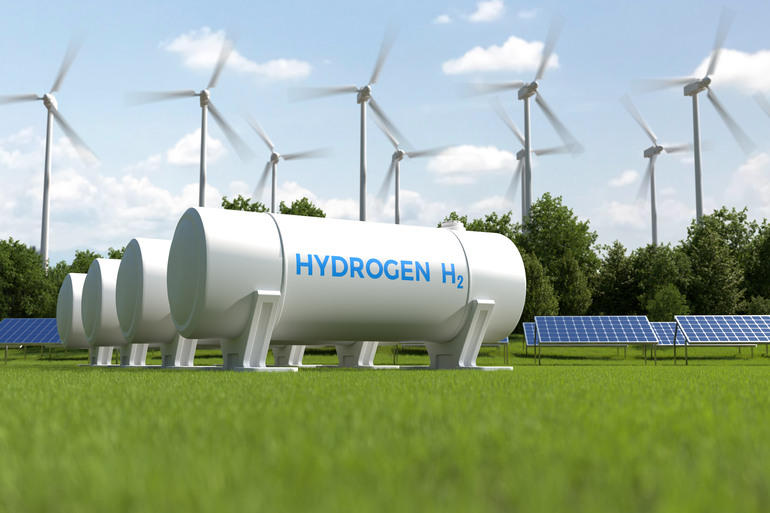
In partnership with h2e POWER, an Indian green hydrogen pioneer, the two companies have already brought this vision to life by deploying India’s first fully autonomous solid oxide electrolyzer system. The breakthrough allows operators to move away from routine supervision and focus on higher-value strategic functions. The system has already exceeded 6,000 hours of stable operation across both partial and full-load conditions, while enabling just-in-time predictive maintenance and showing the potential to reduce electricity consumption by up to 10% in a process where power contributes over 70% of total hydrogen production costs.
Also Read: https://webnewsaddiction.com/pepperlfuchs-cleverreader-delivers-reliable-high-speed-code-reading/
A Collaboration Built to End Legacy Drag
The collaboration between Schneider Electric and Microsoft brings together Schneider Electric’s leadership as a global energy technology partner and pioneer in open, software-defined automation with Microsoft Azure’s powerful cloud, AI, and edge capabilities. Together, the partnership is creating a practical, vendor-neutral modernization path that enables industrial companies to upgrade operations without replacing existing investments or disrupting live production environments.
At the center of this transformation is the Industrial Copilot, which extends intelligence directly to the edge through Microsoft Azure’s cloud and AI services, enabling local inference and continuous reinforcement. It is designed to automate some of the most time-intensive engineering tasks that often slow modernization, including writing control logic, configuring systems, and navigating complex documentation. Teams already using the solution are reporting up to 50 percent time savings, with production line modifications that once required weeks now being completed within hours.
Powering this ecosystem is Schneider Electric’s EcoStruxure Automation Expert, recognized as the world’s first open, software-defined automation platform. By decoupling software from hardware, the platform allows customers to deploy and reuse automation applications seamlessly across different equipment types, multiple vendors, and even generations of legacy infrastructure. Microsoft Azure serves as the secure cloud and edge backbone that unifies the entire environment, connecting everything from individual sensors on the factory floor to enterprise-wide dashboards and decision systems.
Together, both the companies are offering something the industrial world has lacked: a migration path that meets organizations where they are, not where they “should be.”
Proving It in the Field: Green Hydrogen with h2e POWER
Green hydrogen is central to global decarbonization plans; however, producing it cheaply and reliably at scale remains a challenge. Solid oxide electrolyzers (SOECs) offer the highest efficiency of any hydrogen production technology, but their operating conditions are so demanding that it has been difficult to maintain equitable net energy consumption and operate them autonomously.
h2e POWER, an India-originated green tech company based in Pune with operations in India, Germany and the USA, had exactly this challenge. Its SOEC system is technically superior, but limited real-time visibility and the absence of open, scalable automation were pushing operating costs well above design targets.
Working with Schneider Electric, they deployed a new AI-powered control solution on h2e POWER’s 20 kW SOEC system. The solution continuously monitors and adjusts the electrolyzer in real time, managing thermal balance, hydrogen flow, energy inputs, and safety and equipment health, remotely.
The results speak to both the technology and the collaborative approach. Energy efficiency improved, stack wear was significantly reduced, and the levelized cost of hydrogen, the industry’s key economic metric, fell by up to 10%, equivalent to around €500,000 per year for a typical 10 MW plant. The system has now run for more than 6,000 hours, making it one of the most durable autonomous electrolyzer demonstrations in India, and probably anywhere in the world.
“SOECs have always offered unmatched efficiency, but true commercial scale depends on sustainable operations, optimized energy consumption, durability, predictive maintenance and remote, autonomous control. With Schneider Electric’s open, software‑defined automation and Microsoft’s AI capabilities powered by Azure, our systems are becoming smarter, more responsive, safer, and dramatically more scalable. This open architecture also means we can redeploy intelligence across our entire installed base across multiple locations, without the lock‑in that has constrained industrial innovation for decades,” said Mr. Siddharth Mayur, Founder & Managing Director, h2e POWER.
“What we’re seeing at h2e POWER shows the future of industrial automation,” said Dayan Rodriguez, Corporate Vice President, Manufacturing and Mobility, Microsoft. “The system is powerful and built to scale. Enterprise dashboards unify data across every site, machine learning improves with every hour of operation, and open standards make the control logic fully portable.”
“Every CIO and plant leader asks the same question: can software‑defined automation truly perform under real‑world industrial conditions? At h2e POWER, the answer is clear,” said Gwenaelle Huet, Executive Vice President, Industrial Automation at Schneider Electric. “Industrial leaders don’t need another vision; they need a migration path. Our collaboration with Microsoft and the Industrial Copilot delivers exactly that, proving even the most complex energy systems can run as intelligent, autonomous assets.”

1 Comment
Pingback: FLIR Si1-LD sets new standard in Acoustic Imaging Leak Detection