



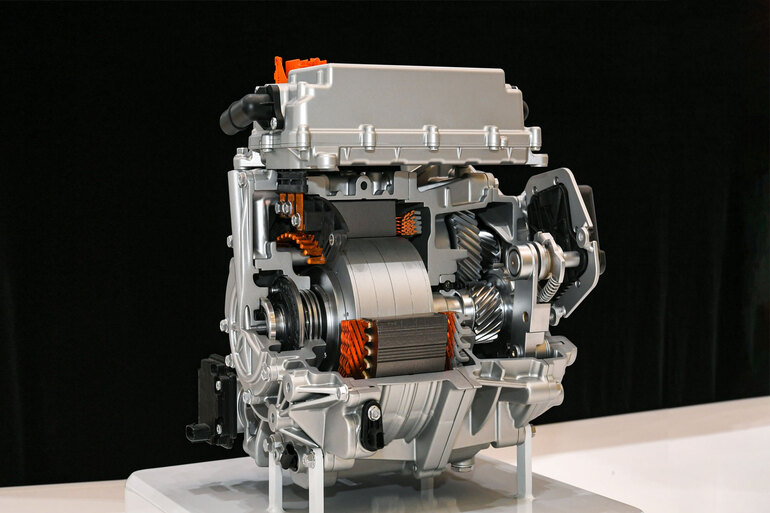
Hyundai Mobis has developed a new 160-kW Power Electric (PE) system designed for mainstream electric vehicle models, expanding its electrification portfolio beyond the previously introduced 250-kW high-performance PE system. The company also plans to complete development of a 120-kW PE system for smaller mobility vehicles within the first half of the year, aiming to establish a comprehensive EV drive system lineup across multiple vehicle categories.
According to Hyundai Mobis, the expanded lineup is expected to strengthen its competitiveness in the global electrification components market. The PE system serves as a key EV powertrain component and integrates the motor, inverter, and reduction gear into a unified drive solution.
The company stated that it has moved beyond a production-focused approach based solely on customer orders and has now secured in-house design capabilities for the core components used in PE systems through its own research and development activities.
During development of the proprietary PE platform, Hyundai Mobis focused on standardization and modularization of major components, including the drive motor stator, inverter, and power modules containing power semiconductors.
Hyundai Mobis said the modular system architecture enables broader scalability, allowing the same platform to be adapted across different vehicle models more efficiently than designing entirely new powertrains for every EV launch. The company believes this strategy could offer advantages in future large-scale production environments as the number of electric vehicle models continues to grow globally.
The approach also represents a shift from conventional industry practices, where automakers typically worked with multiple suppliers to individually develop and assemble PE system components.
Hyundai Mobis said it plans to actively market its newly developed PE systems to global automotive customers, adding that several overseas companies have already expressed interest in the platform. While the company has previously secured international orders for battery systems, the latest development expands its electrification portfolio into the EV powertrain segment. Hyundai Mobis also expects improved profitability by combining both in-house design capabilities and mass production expertise.
According to the company, the newly developed PE system delivers a maximum output of 160 kilowatts, equivalent to approximately 215 horsepower in internal combustion engine vehicles. Hyundai Mobis stated that the system is suitable for most mass-market electric vehicles currently in production. The company added that installing dual PE systems on the front and rear axles can significantly increase overall vehicle output.
Although designed as a universal platform, Hyundai Mobis said the new PE system incorporates performance enhancements. The company noted that specific power measured by output relative to weight improved by around 16 percent, while overall system volume was reduced by nearly 20 percent. Hyundai Mobis attributed these improvements to modular engineering, standardized automotive components, upgraded motor cooling technology, and a newly developed power module based on energy-efficient power semiconductors.
The company had earlier completed development of a 250-kW high-output PE system aimed at performance-oriented EV applications. Hyundai Mobis said the platform was developed to strengthen competitiveness in areas such as maximum power output, motor torque, and thermal management.
Following the introduction of the 160-kW and 250-kW variants, Hyundai Mobis now plans to complete development of a 120-kW PE system for compact electric vehicles during the first half of the year. According to the company, the smaller system is designed with reduced size and weight while also targeting greater cost competitiveness for emerging markets.
With this, Hyundai Mobis will have a complete lineup of drive systems covering all types of electric vehicles, from small mobility solutions to high-performance vehicles. This will not only enable the company to meet the diverse needs of its customers but also allow for a differentiated product strategy tailored to specific purposes.
