



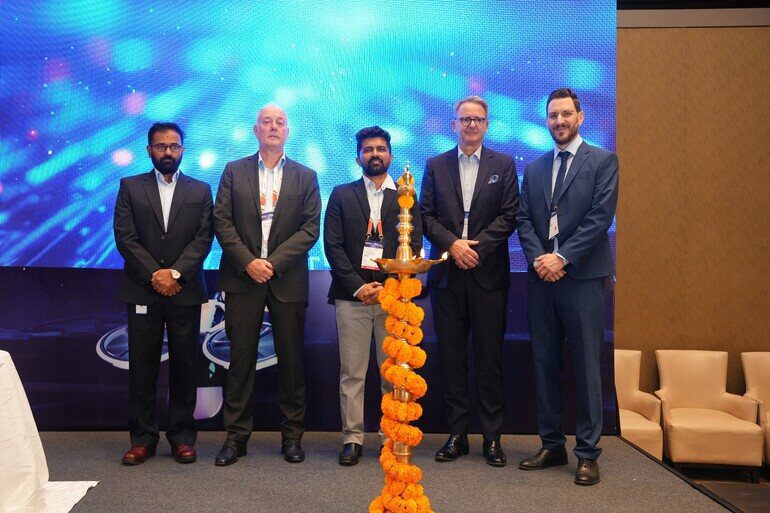
More than 500 delegates from automotive and non-automotive OEMs, suppliers and global engineering companies gathered at the dSPACE User Conference India 2026, held on September 25 at the Marriott Whitefield in Bengaluru. The conference highlighted the growing importance of virtual validation in product development, particularly the ability to test and verify software before the physical hardware is available.
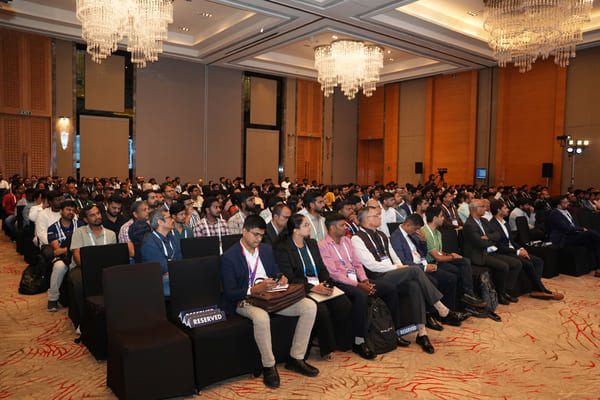
Held under the theme “Software-defined. Test-verified.”, the event featured discussions on simulation, virtual validation and evolving engineering test practices. Speakers explored how early-stage testing can help identify potential defects before they reach production. Reinforcing this perspective, Murali Manohar of Ashok Leyland observed, “The best defects are not the ones we solve quickly. The best defects are the ones we don’t allow to reach the vehicle.”
Partner demonstrations showed turnkey, deployable workflows
The technology showcase centered on practical workflows built with dSPACE’s partner ecosystem, not standalone product demos:
- Generation of DO-178C certification artefacts with TargetLink and partner products
- V2X simulation to test vehicle behaviour for future autonomous and assisted-driving functions
- Cybersecurity penetration testing combined with simulation of real-world effects on the vehicle
- Generation of virtual ECUs with complete production software, with minimal downtime
The demonstrations, integrated with partner showcases, highlighted how these technologies can be deployed in real-world engineering programmes rather than remaining conceptual solutions. They also demonstrated how Indian engineering teams are bringing together multiple technologies to develop integrated, scalable solutions tailored to customer requirements.
Also Read: Two South Korean Auto Component Companies Commit ₹1,370 Crore Investment in Tamil Nadu
A push for locally designed test solutions
India’s expanding mobility sector is creating demand for advanced testing and validation solutions. According to the Society of Indian Automobile Manufacturers (SIAM), domestic vehicle sales reached a record 28.3 million units in FY26, registering 10.4% growth, while exports increased 24% to 6.6 million units. This growing market requires automotive and non-automotive OEMs to simulate a wide range of vehicle configurations, operating conditions and testing scenarios. The opportunity extends to the engineering services sector, with NASSCOM estimating India’s engineering R&D services revenue at $63 billion in FY26 and projecting it to surpass $100 billion by 2030.
That demand drove one of the conference’s clearest themes: a concerted push for test solutions designed and engineered locally for India, shaped by Indian programmes and delivered with local partners.
Customer Perspectives: Validation Challenges Across Industries
- Customers described using dSPACE to manage large numbers of vehicle variants in a virtual environment and accelerate testing.
- Speakers showed how emerging aerospace companies can test flight-control laws safely and precisely before flight tests.
- Multiple speakers raised the testing challenges of software-defined vehicles, including continuous regression and reproducible, scalable end-to-end validation, and how dSPACE addresses them.
Four technologies matched to those requirements
The technologies unveiled for the Indian market address the needs customers described:
- Neural Net Coder converts trained neural networks into deterministic, standards-compliant C code for safety-critical, resource-constrained embedded systems. It includes post-training optimization, built-in verification and early estimates of runtime and memory use.
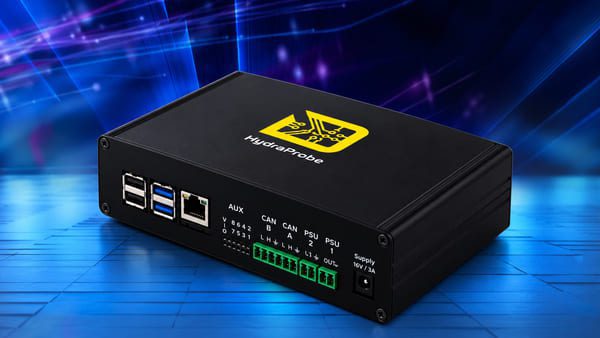
- dissecto HydraProbe is an ECU security test tool that adds controlled penetration testing to existing HIL systems, speeding up cybersecurity testing and giving teams results they can rely on as evidence throughout the validation lifecycle.
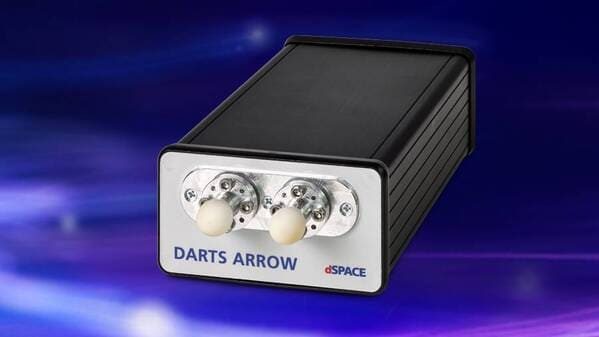
- DARTS ARROW is a compact radar target simulator for functional, end-of-line and periodic inspection testing across 76–81 GHz, with ranges up to 500 metres and simulated speeds up to ±700 km/h.
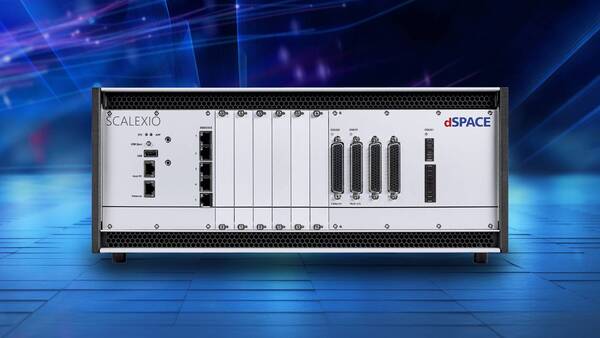
- SCALEXIO Essential is an entry-level, component-level HIL platform for quick validation of edge ECUs, supporting automotive Ethernet, CAN, LIN and analogue, digital and resistance I/O.
How dSPACE India addresses AI in mobility
AI is moving into embedded mobility systems, and the harder task is no longer building a model but proving how it behaves on an ECU inside a larger physical system. Neural Net Coder covers the path from trained network to verified embedded code. The wider dSPACE environment, from SIL to HIL, tests that behaviour before deployment.

“India’s engineers are building for domestic and global markets at a scale few countries match, and they are being asked to prove software works before there is a vehicle to prove it on. This conference showed Indian teams combining partner technologies into turnkey workflows, and it showed the demand for test solutions designed for Indian programmes. The four technologies we introduced, including Neural Net Coder for AI in the ECU, are our answer to that demand.” — Andreas Gau – CEO, dSPACE India Solutions Pvt. Ltd.
The question is no longer whether a system can be tested, but how early, how comprehensively and how repeatedly it can be validated before it reaches the road, the factory floor or the flight line.
