



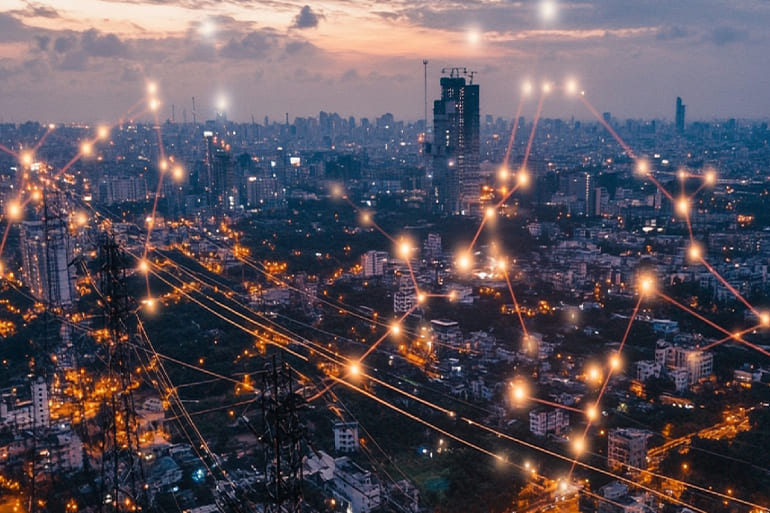
During some of the hottest weeks of April this year, large parts of northern and western India witnessed temperatures crossing 44 degrees Celsius. In earlier years, such extreme weather conditions would almost certainly have triggered widespread fears of blackouts and severe power shortages. Air-conditioners would havepo overloaded city grids, industries would have struggled with unstable supply, and households across urban and semi-urban India would have prepared for scheduled outages. Yet something very different unfolded this time. In India, electricity demand surged to nearly 256 GW, the highest peak demand ever recorded in the country’s history. The scale of consumption itself reflected how dramatically India’s economy has evolved over the past decade. Electricity was not merely being consumed by homes and factories. Metro rail systems, hospitals, telecom networks, EV charging infrastructure, industrial corridors, hyperscale data centres and digitally connected manufacturing units were all simultaneously drawing power at enormous scale.
Despite this extraordinary pressure, the national grid remained far more resilient than many experts would have expected even a few years ago. Renewable energy contributed significantly during daytime demand, thermal power stations increased generation output when required, and transmission networks handled large-scale interstate electricity movement with improving efficiency. This moment may eventually be remembered as more than a seasonal demand spike caused by rising temperatures. It reflected a deeper structural transformation taking place inside the Indian economy.
For decades, India’s electricity story revolved around access. The national objective was to electrify villages, reduce outages and improve reliability for households and industries. Electricity was viewed primarily as a developmental necessity that is essential for growth, but rarely discussed as a strategic pillar of economic transformation. That framework no longer explains what is happening in India today.
Electricity is no longer merely supporting economic activity. Increasingly, it is becoming the foundational infrastructure beneath every major economic ambition the country now pursues. Semiconductor manufacturing requires uninterrupted and highly stable power quality. Artificial Intelligence and Cloud Computing depend on massive data-centre ecosystems powered continuously by electricity. Electric mobility shifts transportation demand away from oil and directly onto charging infrastructure connected to the grid. Green hydrogen production depends entirely on electricity-intensive electrolysis systems. Modern manufacturing plants are evolving into digitally integrated electrical ecosystems where robotics, automation and industrial software operate continuously in real time. India may believe it is entering a digital economy. But the transformation underway is even more fundamental than that. The country is entering an electrified economy. And that transition could reshape India more profoundly than many currently realize.
India’s Electricity Demand Is Changing Structurally
One of the biggest misconceptions about India’s power sector is that electricity demand growth is still primarily linked to household consumption. That may have been true fifteen years ago when expanding electrification and rising appliance ownership drove demand patterns. Today, however, the structure of electricity consumption is changing because the structure of the Indian economy itself is changing. India is no longer building only homes and offices. It is building an electricity-intensive industrial ecosystem.
The country is simultaneously attempting to become a semiconductor manufacturing destination, an artificial intelligence hub, a green hydrogen producer, an EV manufacturing ecosystem and a digital infrastructure powerhouse. Each of these ambitions depends on one foundational requirement: Uninterrupted electricity at enormous scale.
Consider the economics of a modern hyperscale data centre. Thousands of servers operate continuously every second, processing cloud workloads, financial transactions, enterprise software systems, AI models and streaming services. The cooling infrastructure alone consumes enormous quantities of electricity because servers generate extraordinary heat while operating around the clock. Industry estimates suggest a single hyperscale data centre can consume electricity comparable to a medium-sized town.
Now imagine dozens of such facilities operating simultaneously across cities like Chennai, Mumbai and Hyderabad over the next decade. This is why India’s electricity story is no longer merely about household access or urban reliability. It is increasingly becoming a story about industrial competitiveness itself. The implications are enormous because the future economy consumes electricity differently from the old economy. Earlier, electricity demand rose because households purchased fans, televisions and refrigerators. In the emerging economy, electricity demand rises because factories are becoming automated, transportation systems are becoming electrified and industrial ecosystems are becoming digitally integrated. Even sectors traditionally viewed through non-energy lenses are quietly becoming electricity-intensive.
Electric vehicles require charging infrastructure. Semiconductor fabs require ultra-stable power environments where even brief voltage fluctuations can disrupt production cycles worth millions of dollars. Green hydrogen projects consume enormous amounts of electricity because electrolysis itself is fundamentally an energy-conversion process. AI and cloud infrastructure are creating entirely new categories of electricity demand through the rapid expansion of hyperscale computing ecosystems. India is therefore not merely increasing electricity consumption. It is redesigning the architecture of national energy demand itself.
India’s Cooling Economy Is Just Beginning
One of the least discussed aspects of India’s future electricity demand may also become one of the most important: Cooling. India still has relatively low air-conditioner penetration compared to China or developed economies. But rising incomes, rapid urbanization and increasingly intense heatwaves are beginning to change consumption behaviour across both metropolitan and tier-two cities. For millions of households, air-conditioning is no longer viewed as a luxury purchase. It is increasingly becoming a necessity linked to productivity, health and quality of life. This shift carries enormous implications for the power sector.
Cooling demand is highly electricity-intensive and heavily concentrated during peak summer periods, precisely when grids are already under maximum stress. As temperatures continue rising and middle-class consumption expands, air-conditioning alone could become one of the largest drivers of electricity demand growth over the coming decades. The International Energy Agency has previously projected that India could witness one of the world’s fastest expansions in cooling demand in the years ahead. In practical terms, this means future electricity planning will increasingly need to account not only for industrial growth and digital infrastructure, but also for climate-linked urban consumption patterns. In many ways, India’s future electricity challenge may be shaped as much by rising temperatures as by economic expansion itself.
Renewable Energy Is Reshaping the Structure of the Grid
India’s renewable-energy transition is often discussed primarily through the lens of climate policy and sustainability commitments. While the environmental significance of this transition is undeniable, the larger transformation unfolding beneath the surface is economic and infrastructural in nature. Renewable energy is not simply changing how India generates electricity. It is changing how the entire electricity system itself must function.
Over the last few years, India has emerged as one of the world’s fastest-growing renewable-energy markets. In FY26 alone, the country added nearly 51 GW of renewable-energy capacity, the highest annual renewable-energy addition in its history. Solar capacity crossed 150 GW, while non-fossil fuel capacity approached nearly 283 GW. At one level, these numbers reflect India’s accelerating clean-energy ambitions. At another level, however, they signal something much larger: The construction of an entirely new kind of energy economy.
Traditional fossil-fuel systems operated through relatively predictable models. Coal plants generated stable output around the clock and were often located reasonably close to industrial demand centres. Electricity flowed through grids in a comparatively linear and predictable manner. Renewable systems operate differently. Solar generation peaks during daytime hours when sunlight is strongest. Wind output fluctuates depending on geography, weather conditions and seasonal wind patterns. Some regions may generate surplus electricity while others simultaneously experience rising industrial demand. The future electricity grid must therefore become significantly more interconnected, flexible and intelligent than the systems India historically relied upon. This transition is already becoming visible across the country.
Rajasthan’s deserts are rapidly turning into giant solar-generation zones because of abundant land and high solar irradiance. Gujarat is emerging as both a solar and wind powerhouse. Tamil Nadu continues expanding its wind-energy ecosystem. But while renewable generation may happen in these regions, electricity demand is simultaneously growing inside industrial corridors, technology hubs and urban centres located hundreds or even thousands of kilometres away.
A data centre in Chennai, a semiconductor facility in Gujarat, an EV manufacturing cluster in Tamil Nadu and industrial parks across western India may all depend on electricity generated far away from where they actually operate. This changes the role of the electricity grid entirely. The future grid cannot function merely as a distribution network carrying electricity locally from nearby power plants. It must evolve into a highly dynamic national electricity marketplace capable of moving power intelligently across states and regions in real time. And this is where one of India’s biggest invisible infrastructure stories begins to emerge.
The Invisible Infrastructure Powering India’s Future
Transmission infrastructure rarely attracts public attention because, unlike solar parks or wind turbines, it is not visually dramatic. Most citizens notice transmission lines only as steel towers stretching silently across highways, deserts and agricultural landscapes. Yet the future success of India’s energy transition may depend less on solar panels themselves and more on the invisible networks carrying electricity across the country. Without transmission infrastructure, renewable energy becomes stranded capacity.
A solar park generating thousands of megawatts in Rajasthan has limited economic value unless that electricity can reliably reach factories, industrial clusters, transport systems and digital infrastructure ecosystems elsewhere in the country. Renewable generation and electricity consumption are increasingly happening in completely different geographies. That single reality is quietly transforming transmission infrastructure into one of the most strategic sectors of India’s future economy. The scale of this transformation is enormous.
India’s renewable ambitions require electricity to move across regions at a level never previously experienced in the country’s power sector. Massive investments are already flowing into interstate transmission systems, high-voltage direct current corridors, green-energy corridors and grid-modernization projects designed to handle increasingly complex electricity flows. The future electricity grid may increasingly resemble an intelligent digital network rather than a traditional utility system.
Electricity will need to move continuously between regions depending on where renewable generation is strongest, where industrial demand is rising and where balancing systems are required to stabilize supply. Technologies such as HVDC transmission systems, smart substations, digital grid-management platforms and real-time balancing software are therefore becoming strategically important.
The challenge is not unique to India. Across parts of Europe and the United States, renewable-energy projects are increasingly facing delays not because solar panels or wind turbines are unavailable, but because electricity grids are unable to absorb and transport power efficiently. Grid congestion has emerged as one of the defining bottlenecks of the global energy transition. India now faces a similar challenge, but at much larger scale. This is also why battery storage is rapidly moving from a niche technology discussion into a strategic infrastructure priority.
Solar generation peaks during the daytime when sunlight is strongest. But electricity demand in cities often rises sharply after sunset as households return home, commercial buildings remain active, cooling demand intensifies and urban transport systems continue operating at scale. This creates a structural mismatch between when renewable electricity is generated and when electricity is actually needed most. Battery-storage systems help solve this imbalance by storing surplus renewable electricity during the day and releasing it during evening demand peaks. In many ways, storage infrastructure is becoming the shock absorber of the renewable-energy economy.
The implications extend far beyond the energy sector itself. Transmission engineering, smart-grid systems, industrial software, battery manufacturing, grid-balancing technologies and power electronics could emerge as major industrial ecosystems over the next decade. Hidden beneath India’s solar expansion is the rise of an entirely new infrastructure economy. And countries capable of mastering these invisible systems may ultimately shape the future global industrial order.
Artificial Intelligence Could Become India’s Biggest Energy Story
Artificial Intelligence is generally discussed as a technological revolution driven by algorithms, software and computing power. Yet beneath the excitement surrounding AI lies another reality receiving far less public attention. Artificial Intelligence is also becoming an energy story. Every AI-generated image, chatbot interaction, recommendation engine and large language model ultimately depends on one foundational resource: Electricity.
Training advanced AI systems requires enormous computing infrastructure operating continuously across thousands of high-performance processors. Those processors generate extraordinary amounts of heat and therefore require extensive cooling systems running around the clock. As AI adoption accelerates globally, countries are beginning to realize that the future AI race may also become a race for energy capacity. This changes the conversation entirely.
For years, technological competitiveness was discussed primarily through software talent, internet penetration and innovation ecosystems. Increasingly, however, the ability to provide abundant, reliable and scalable electricity may determine which countries emerge as major AI and digital infrastructure hubs. India is already witnessing the early stages of this transition. Data-centre infrastructure is expanding rapidly across cities such as Chennai, Mumbai, Hyderabad and Noida, as cloud computing, digital services and AI workloads grow across the economy. India already generates billions of digital transactions every month through platforms such as UPI, while streaming services, enterprise software ecosystems and AI-enabled applications continue expanding rapidly. But behind every digital interaction lies physical infrastructure consuming electricity at massive scale.
A single hyperscale data centre can consume electricity comparable to a medium-sized town because thousands of servers, storage systems and cooling units operate continuously without interruption. Industry estimates suggest data centres globally could consume close to 1,000 terawatt-hours of electricity annually by the end of the decade if AI adoption continues accelerating: A figure comparable to the total electricity consumption of some industrialized nations.
The scale becomes even more striking when viewed through the economics of AI training itself. Training frontier AI systems can require thousands of advanced GPUs operating simultaneously for weeks or months. Once trained, these systems continue consuming enormous quantities of electricity through inference operations every time users interact with them. In simple terms, Artificial Intelligence is turning data into electricity demand.
This creates profound implications for India’s future economy because AI infrastructure cannot tolerate unstable power systems. Even brief voltage fluctuations can disrupt operations, damage sensitive hardware and create major service interruptions. The future AI economy may therefore increasingly favour countries capable of supplying uninterrupted, low-cost and scalable electricity to digital infrastructure ecosystems. The implications extend far beyond technology companies.
AI adoption is expected to transform manufacturing, logistics, finance, healthcare, transportation and industrial automation. Smart factories, autonomous systems and AI-driven industrial ecosystems will all depend on resilient electricity infrastructure operating continuously in real time. This means electricity is no longer merely supporting economic activity. Increasingly, electricity is becoming the infrastructure layer beneath intelligence itself. And hidden within this transition may lie one of the defining infrastructure opportunities of the coming decade.
The Future Economy Will Run on Electricity
India’s growth story is entering a fundamentally new phase. For decades, economic expansion was driven largely by services, consumption and gradual industrialization. The next phase of growth will depend increasingly on electricity-intensive systems operating continuously at scale.
The encouraging reality is that India has already demonstrated its ability to execute large-scale infrastructure transformation when policy intent, capital investment and execution capability align. Highway construction accelerated dramatically over the last decade. Digital-payments infrastructure transformed financial inclusion at extraordinary scale. Renewable-energy deployment expanded rapidly. Record electricity demand is increasingly being managed without nationwide disruptions. These developments indicate something important about modern India. The country is gradually shifting from a scarcity mindset towards infrastructure-scale thinking.
That shift matters because the future global economy will not reward countries that merely announce ambitious targets. It will reward countries capable of building resilient systems that operate reliably over decades. Increasingly, those systems will depend on the ability to generate, move, store and intelligently manage electricity at enormous scale.
In the twentieth century, industrial power was often measured through oil reserves, manufacturing capacity and access to global trade routes. In the twenty-first century, competitiveness may increasingly depend on something less visible but far more foundational: Electricity Infrastructure.
India’s next economic transformation may therefore not be decided only in financial markets or policy announcements. It may be determined by transmission corridors crossing deserts, battery-storage systems stabilizing renewable grids after sunset, intelligent networks balancing electricity flows across states, and digital infrastructure ecosystems consuming power continuously every second. The future economy will not simply be digital. It will be electric.
* The perspectives in this opinion piece are informed by industry trends, market data, infrastructure developments and ongoing discussions with stakeholders across India’s energy, digital and industrial ecosystems.

1 Comment
Pingback: ABB Targets the Future of Fleet Electrification with OM X-Series