



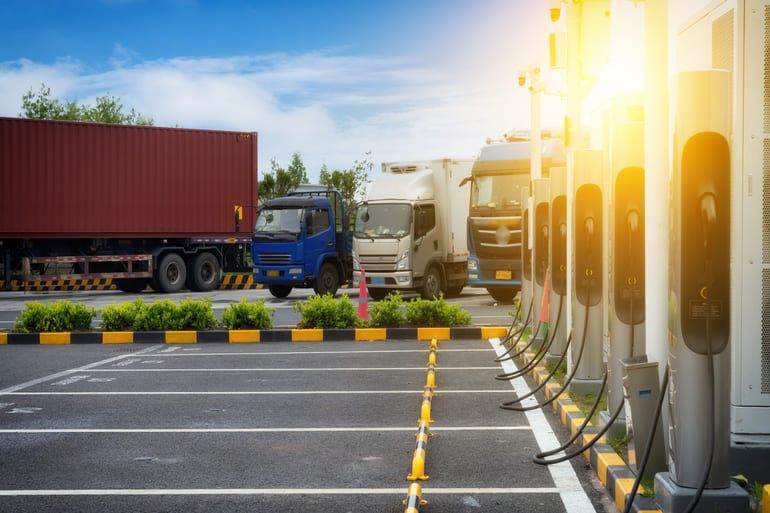
India’s electric mobility journey is often described as a story of catching up, focused on closing gaps in battery technology, reducing costs, and building charging infrastructure at scale. While that narrative may have held true in the early stages, it no longer captures the reality on the ground. Today, India is witnessing something far more dynamic. The transition is now being shaped by real-world use cases, particularly in sectors where mobility is not optional but essential. Among these, last-mile delivery has emerged as one of the most influential forces redefining how electric vehicles are adopted, deployed, and scaled. As this shift gains momentum, EV policy is also evolving to better align with high-utilization segments, reflecting a growing recognition that real-world demand must guide the next phase of electric mobility.
This transformation is not theoretical. It is visible in the steady rise of electric vehicle adoption across the country. India recorded over 2.3 million EV sales in 2025, pushing penetration levels to around 8 percent of total vehicle registrations. A significant share of this growth comes from two-wheelers and three-wheelers, which form the backbone of last-mile delivery systems. At the same time, India’s digital economy continues to expand rapidly, with E-Commerce and Hyperlocal Delivery volumes growing at double-digit rates. The intersection of these trends is strengthening the case for a more targeted and responsive EV policy, one that supports fleet electrification, enables infrastructure development, and aligns incentives with real-world usage patterns. As EV policy continues to adapt, it is increasingly shaping how efficiently and sustainably this next phase of mobility growth unfolds.
The Economics That Are Driving a Structural Shift
At the core of this transformation lies a fundamental shift in economics, particularly in high-utilization segments such as last-mile delivery. Unlike personal vehicles that are often used intermittently, delivery vehicles operate for extended hours, frequently covering between 50 and 100 kilometres per day across multiple trips. This level of utilization amplifies the importance of cost efficiency, making even small savings per kilometre highly impactful over time. Electric vehicles are increasingly demonstrating a clear advantage in this context. Industry data indicates that EVs can reduce operating costs by 20 to 30 percent compared to ICE (Internal Combustion Engine) vehicles, largely due to lower energy costs and reduced maintenance requirements.
Real-world examples reinforce this trend. A mid-sized logistics operator in Hyderabad reported that after transitioning part of its fleet to electric two-wheelers, it achieved operational savings of nearly 25 percent within the first year. Similarly, fleet operators in cities like Bengaluru and Delhi have observed reductions in maintenance downtime due to the simpler mechanical structure of EVs, which translates into higher vehicle availability and more completed deliveries per day. Over the lifecycle of a vehicle, these advantages compound, making EVs not just an environmentally responsible choice but a financially strategic one for businesses operating in competitive delivery markets.
Fleet Electrification Is Scaling Faster Than Expected
The growing economic viability of EVs is reflected in the scale at which companies are committing to electrification. What began as pilot programmes has evolved into large-scale deployment strategies across the logistics and E-Commerce sectors. Flipkart, for instance has already deployed more than 10,000 electric vehicles across its delivery network and is working towards a fully electric last-mile fleet by 2030. Amazon India has made a similar commitment, with plans to integrate 10,000 EVs into its operations as part of its broader sustainability goals. Food and grocery platforms such as Zomato and BigBasket are also moving aggressively in this direction, targeting substantial electrification of their delivery fleets over the coming years.
These commitments are significant not only in terms of numbers but also in their broader ecosystem impact. Large-scale fleet adoption is creating steady demand for charging infrastructure, encouraging innovation in vehicle design, and attracting investment into financing and service networks. For instance, EV-focused leasing and asset financing platforms such as Ola Electric (through its leasing-led models), Alt Mobility, and Revfin are enabling fleet operators to reduce upfront costs and shift toward usage-linked payment structures. These models are particularly relevant for delivery aggregators and logistics operators, where predictable daily usage makes pay-per-kilometre or subscription-based structures more viable.
Similarly, companies such as Lithium Urban Technologies have demonstrated how integrated leasing, charging, and fleet management solutions can support large-scale electrification in corporate mobility and logistics. This ecosystem effect shows that fleet electrification is not operating in isolation. Instead, it is acting as a catalyst that is accelerating innovation across multiple layers of the EV value chain, from financing and infrastructure to software and operations.
Infrastructure Is Evolving to Match High-Utilization Needs
As electric vehicle adoption scales across India, infrastructure is evolving in response to the unique demands of last-mile delivery systems, where vehicles operate continuously and downtime directly affects earnings. India has already built a growing network of over 12,000 public EV charging stations, with a significant concentration in urban centres such as Delhi, Bengaluru, and Mumbai. However, for delivery ecosystems, the challenge is not just availability but accessibility and speed. A delivery rider completing 20 to 30 orders in a day cannot afford long charging breaks, which makes the design and placement of infrastructure just as important as its scale. In high-density delivery zones, even a 30-minute delay can translate into missed orders and reduced daily income, highlighting why infrastructure must evolve around real-world usage patterns rather than theoretical demand.

This is where battery swapping is beginning to play a transformative role. By allowing riders to replace depleted batteries with fully charged ones in a matter of minutes, swapping significantly reduces downtime and enables continuous operations. In cities like Delhi, early policy support has encouraged the rollout of swapping networks across commercial hubs and delivery corridors. For instance, partnerships between EV manufacturers and swapping service providers have enabled delivery fleets to operate with minimal interruption, with riders able to complete full-day shifts without waiting for charging cycles. In Bengaluru, pilot deployments of swapping-enabled fleets have shown that riders can increase daily utilization by up to 15 to 20 percent, simply by eliminating charging downtime. For a delivery partner, this translates directly into higher earnings and more predictable work schedules.
Large-scale logistics players are also beginning to integrate such models into their operations. Companies like Amazon India and Flipkart have explored dedicated charging hubs and partnerships with infrastructure providers to support their growing EV fleets. These hubs are often located close to warehouses or high-demand delivery zones, reducing the need for long detours and improving route efficiency. In practice, this means that vehicles spend more time on the road completing deliveries rather than searching for charging points, which enhances both operational productivity and service reliability.
Internationally, the effectiveness of such infrastructure models is even more pronounced. In China, battery swapping has been scaled extensively across urban logistics networks, with cities deploying thousands of swapping stations to support commercial EV fleets. Companies operating in these markets have demonstrated that swapping can reduce vehicle downtime to just a few minutes, enabling near-continuous utilization. Similarly, in European cities, fast-charging corridors and strategically placed urban charging hubs have supported the growth of electric delivery fleets by ensuring reliable access to energy throughout the day. These examples highlight how infrastructure, when aligned with operational needs can act as a powerful enabler of adoption rather than a limiting factor.
India’s gradual adoption of these approaches indicates that infrastructure is no longer just expanding in size but also evolving in design and intent. The focus is shifting towards creating systems that support high-frequency usage, minimize downtime, and integrate seamlessly into delivery workflows. As charging networks become denser and swapping models gain traction, the ecosystem is moving closer to a point where infrastructure not only supports EV adoption but actively accelerates it. For last-mile delivery, this evolution is critical, as it determines how efficiently electric vehicles can perform in the environments where they are needed most.
Policy Is Entering Its Next Phase of Evolution
India’s EV growth has been supported by early policy initiatives that focused on reducing barriers to adoption, with EV policy playing a central role in shaping market momentum. Programmes such as FAME II have been instrumental in making electric vehicles more accessible by lowering upfront costs and encouraging manufacturers to invest in the segment. As a result, India witnessed EV sales cross 2.3 million units in 2025, with electric two-wheelers alone accounting for more than half of total volumes. This surge highlights how EV policy can directly influence adoption when aligned with affordability and demand. However, as the market matures, there is now an opportunity for EV policy to evolve further and reflect the realities of high-utilization segments such as last-mile delivery, where vehicles operate more intensively and deliver higher economic and environmental returns.
Data from fleet operations increasingly reinforces this shift towards targeted policy design. Vehicles used in delivery applications often cover 70 to 100 kilometres per day, compared to significantly lower usage in private vehicles, resulting in disproportionately higher fuel savings and emissions reduction. For instance, companies like Flipkart have already deployed over 10,000 electric vehicles in their supply chain, reporting improved cost efficiencies and lower operating expenses over time. Similarly, Amazon India has committed to integrating 10,000 EVs into its delivery network, while platforms such as Zomato are actively working towards large-scale fleet electrification. These examples demonstrate that high-utilization EVs are not only viable but economically advantageous when supported by the right ecosystem.
Recognizing this, global markets have begun experimenting with more targeted policy approaches that go beyond upfront subsidies. In China, commercial EV fleets benefit from operational incentives linked to vehicle usage, enabling faster adoption in logistics-heavy segments. Cities such as Shenzhen have achieved near-complete electrification of bus fleets and significant penetration in logistics vehicles by aligning policy support with utilization patterns. In Europe, countries like the Netherlands and Germany have introduced low-emission zones and financial incentives tied to emissions reduction targets, encouraging logistics operators to transition towards electric fleets. These models provide valuable insights for India’s evolving EV policy framework, particularly in designing incentives that reward real-world usage and environmental impact.
Adapting such approaches to the Indian context could significantly enhance the effectiveness of policy interventions. By linking incentives to factors such as distance covered, energy consumption, or fleet utilization, EV policy can prioritize segments that deliver the highest returns in terms of emissions reduction and economic efficiency. At the same time, supporting infrastructure models such as battery swapping and fleet financing can further strengthen adoption in last-mile delivery. As India moves into this next phase, the evolution of EV policy will play a critical role in ensuring that growth is not only rapid but also efficient, targeted, and sustainable.
Cities Are Becoming Active Enablers of Efficiency
Urban environments play a defining role in shaping how effectively last-mile EV systems operate, because they determine the real-world conditions under which delivery networks function every day. In India’s largest cities, where population density continues to rise and traffic congestion remains a daily reality, the efficiency of delivery operations is closely tied to how well urban infrastructure supports them. India is expected to have over 600 million urban residents by 2030, and cities like Bengaluru, Delhi, and Mumbai already handle millions of delivery orders each day. In such high-demand environments, even small inefficiencies such as longer travel distances, limited parking, or lack of nearby charging access can significantly increase operational costs and delivery timelines. At the same time, these very challenges create opportunities for cities to play a more active role in improving how electric mobility systems perform at scale.
This shift is already becoming visible through targeted urban interventions. In Bengaluru, pilot projects exploring micro-distribution hubs have demonstrated that bringing inventory closer to demand centres can reduce delivery distances and improve operational efficiency by 15 to 20 percent. By shortening the distance between warehouses and end customers, these hubs not only reduce travel time but also lower energy consumption, which is particularly beneficial for electric vehicles operating on fixed battery ranges. Similarly, Delhi has made progress in integrating EV charging infrastructure into commercial and high-density zones, with the city targeting thousands of public charging points under its EV policy framework. This has enabled delivery riders and fleet operators to access charging facilities without significant detours, reducing idle time and improving daily vehicle utilization.
Global examples further highlight how city-level planning can transform delivery efficiency. In cities such as Amsterdam and London, the introduction of low-emission zones and urban logistics hubs has encouraged the adoption of electric delivery vehicles while simultaneously improving traffic flow and reducing congestion. These cities have also experimented with designated delivery windows and dedicated parking spaces for logistics vehicles, reducing time lost in searching for parking and improving turnaround times. While India’s urban context is unique in scale and complexity, these approaches offer valuable insights into how targeted planning can enhance both efficiency and sustainability.
For India, the opportunity lies in adapting these ideas to local conditions and scaling them across high-demand urban corridors. Creating dedicated delivery zones in commercial areas, expanding micro-fulfillment centres closer to consumers, and ensuring widespread availability of charging and battery swapping infrastructure can collectively improve system performance. For logistics companies, this translates into faster deliveries, lower operational costs, and higher fleet productivity. For cities, it means reduced congestion, lower emissions, and more organized urban mobility systems. As these elements begin to align, cities are no longer just passive backdrops for EV adoption but active enablers of a more efficient and sustainable delivery ecosystem.
Standardization Can Unlock System-Wide Efficiency
As India’s EV ecosystem expands, the importance of interoperability and standardization is becoming increasingly visible at the ground level, especially for fleet operators managing hundreds or even thousands of vehicles across cities. Today, the market is characterized by multiple battery formats, charging connectors, and vehicle configurations, which can create operational complexity rather than efficiency at scale. For a logistics company running a mixed fleet of electric two-wheelers and three-wheelers sourced from different manufacturers, even basic operations such as charging or battery replacement can become fragmented if systems are not compatible. This challenge is not theoretical. Fleet operators have reported that lack of standardization can increase idle time, require multiple charging setups, and limit flexibility in vehicle deployment, all of which directly impact utilization and cost efficiency.
Early signals from the ecosystem highlight how addressing this challenge can unlock meaningful gains. India already has over 12,000 public charging stations, but utilization remains uneven, partly because compatibility across vehicles and charging infrastructure is still evolving. At the same time, battery swapping operators are experimenting with interoperable networks that allow vehicles from different manufacturers to access shared infrastructure. For example, partnerships between OEMs and swapping service providers in cities like Delhi and Bengaluru are beginning to demonstrate how standardized battery formats can reduce downtime and improve operational continuity for delivery fleets. A delivery rider who can access any nearby swapping station, regardless of vehicle brand is able to complete more trips in a day, improving both earnings and system efficiency.
A useful way to understand the potential of standardization is to look at India’s own experience with digital payments. The success of systems such as Unified Payments Interface transformed the payments ecosystem by allowing seamless transactions across banks, apps, and platforms. Within a few years, UPI scaled to processing over 10 billion transactions per month, largely because users and businesses could operate within a unified and interoperable framework. This same principle can be applied to electric mobility. If charging protocols, payment systems, and battery interfaces are standardized, the EV ecosystem can move from fragmented growth to integrated scale.
Experiences from global EV markets highlight how standardization can accelerate large-scale adoption. In China, standardization of charging infrastructure has played a critical role in supporting the world’s largest EV market, with the country deploying over 2 million public charging points and enabling widespread compatibility across vehicles and networks. Similarly, in Europe, regulatory frameworks have ensured that public chargers follow common standards such as CCS (Combined Charging System), allowing EV users to access infrastructure across countries without compatibility concerns. These examples show that standardization does not limit innovation. Instead, it creates a stable foundation on which innovation can scale more effectively.
For India, the path forward lies in gradually building this layer of interoperability across the ecosystem. Standardizing charging protocols, ensuring compatibility in battery swapping networks, and aligning safety and performance benchmarks can significantly reduce friction for both operators and users. For logistics companies, this would translate into fewer operational constraints, lower infrastructure costs, and greater flexibility in scaling fleets. For the broader ecosystem, it would enable a more cohesive and efficient system where different players can innovate within a shared framework.
As EV adoption continues to accelerate, standardization will not just be a technical requirement but a strategic enabler of scale. It has the potential to simplify complexity, improve utilization, and unlock efficiencies that are critical for sustaining long-term growth. In that sense, the next phase of India’s EV journey will depend not only on how many vehicles are deployed, but also on how seamlessly they can operate within an integrated and interoperable ecosystem.
The Human Element Remains Central to Adoption
At the centre of India’s electric mobility transition are the delivery partners who power the country’s last-mile ecosystem every single day. From food delivery riders navigating dense urban streets to e-commerce agents completing dozens of drop-offs in a shift, these individuals are not just users of electric vehicles, but key decision-makers in how quickly adoption scales. Their daily experience with EVs determines whether the transition remains limited or becomes mainstream. Surveys across logistics platforms indicate that nearly 46 percent of delivery riders are open to switching to electric vehicles, largely driven by lower running costs and the simplicity of operating EVs compared to conventional vehicles. For many riders, fuel expenses can account for a significant portion of daily earnings, and switching to electric can reduce these costs by 30 to 40 percent, directly improving take-home income over time.
On the ground, delivery networks are already beginning to reflect this shift. Several delivery partners working with platforms like Zomato and Swiggy have reported noticeable savings after transitioning to electric two-wheelers, particularly in cities where daily travel distances range between 60 and 100 kilometres. In Bengaluru, pilot programmes involving electric delivery fleets showed that riders were able to save up to ₹150 to ₹200 per day on fuel alone, which translates into meaningful monthly savings. Similarly, logistics operators partnering with Amazon India have observed that EV-based delivery routes not only reduce costs but also offer smoother riding experiences due to lower vibration and noise, improving overall rider comfort during long working hours.
However, the decision to switch is not based on cost alone. For many delivery partners, reliability remains a critical factor. A rider’s ability to complete deliveries without interruptions directly impacts earnings, which makes access to dependable charging or battery swapping infrastructure essential. In cities where swapping stations are available within short distances, adoption rates have been noticeably higher, as riders can replace batteries in minutes and continue working without long delays. On the other hand, in areas with limited infrastructure, range anxiety and downtime continue to influence decision-making. Access to financing is another important consideration. Many delivery partners operate on tight budgets and the upfront cost of purchasing an EV can be a barrier despite long-term savings. This is where flexible financing models, such as leasing or pay-as-you-go options are beginning to make a difference by reducing initial financial pressure.
Addressing these challenges requires coordinated action across the ecosystem. Expanding charging and battery swapping networks in high-demand delivery zones can significantly improve reliability and confidence among riders. At the same time, financing solutions tailored to gig workers can accelerate adoption by making EVs more accessible without large upfront investments. Improvements in vehicle design are also playing a role. Manufacturers are increasingly focusing on features such as better suspension, higher load capacity, and longer battery life to suit the needs of delivery applications. When these elements come together, they create an environment where electric mobility is not just a viable option, but a preferred choice for those who depend on their vehicles for daily income.
Ultimately, the success of India’s EV transition will depend as much on people as it does on technology and policy. When delivery partners experience tangible benefits in terms of cost savings, reliability, and comfort, adoption becomes self-sustaining. Their everyday decisions, repeated across millions of trips and thousands of cities have the potential to shape the future of electric mobility in a way that no single policy or innovation can achieve on its own.
From Adoption to Optimization: India’s EV Turning Point
India’s EV ecosystem has now reached a stage where the focus is shifting from adoption to optimization. Monthly EV registrations have consistently crossed 2 lakh units, with recent data showing sustained demand across key segments. This growth is particularly concentrated in high-utilization categories such as two-wheelers and three-wheelers, reinforcing the importance of last-mile delivery in driving adoption. The next phase of growth will depend on how effectively these vehicles are integrated into daily operations, including route optimization, charging efficiency, and fleet management.
Policy frameworks can play a critical role in enabling this transition. By aligning incentives with usage patterns and supporting infrastructure development in high-demand areas, policymakers can enhance the overall efficiency of the ecosystem. At the same time, continued innovation in business models such as leasing and battery-as-a-service can further reduce barriers to adoption. These developments indicate that India is moving towards a more mature EV ecosystem, where the focus is not just on growth but on performance and scalability.
India’s EV Journey Enters Its Most Defining Phase
India’s electric mobility transition is entering a phase defined by opportunity and refinement. The progress achieved so far has created a strong foundation, particularly in high-impact segments such as last-mile delivery, where the benefits of electrification are both visible and measurable. With continued alignment across policy, infrastructure, and industry efforts, India has the potential to build an EV ecosystem that is not only large in scale but also highly efficient and resilient.
The next chapter of this journey will be defined not just by how many vehicles are electrified, but by how effectively they are integrated into the systems that power the economy. In this context, last-mile delivery is not simply a use case; it is a strategic driver that can shape the future of electric mobility in India.
The perspectives in this opinion piece are informed by market data, industry trends, and discussions with stakeholders across India’s electric mobility ecosystem.
