



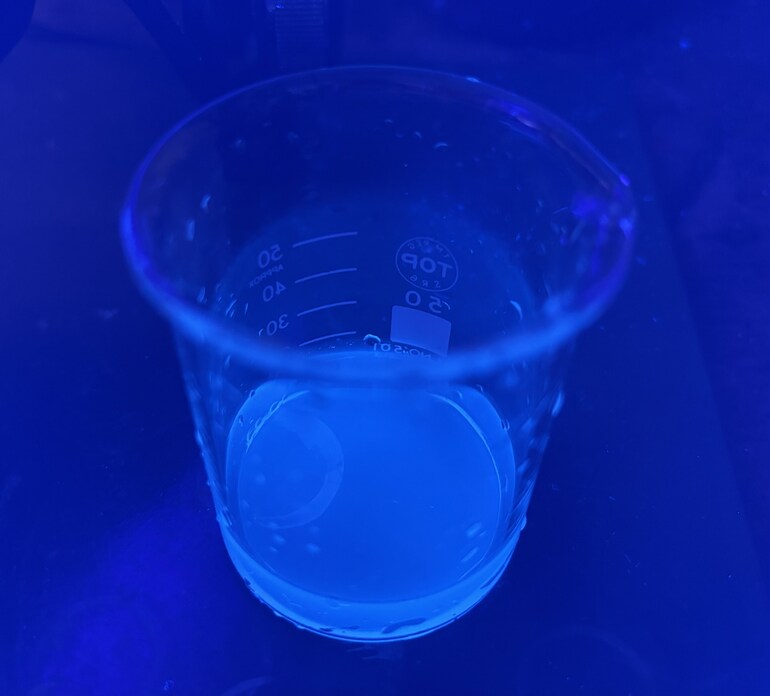
Green Science Alliance is a GreenTech startup focused on developing advanced materials and technologies to build a sustainable, carbon-neutral society in the energy and environmental sectors. Recently, Dr. Ryohei Mori at Green Science Alliance successfully synthesized carbon quantum dots from municipal solid waste (MSW).
Quantum dots are extremely small, engineered nanoparticles typically ranging from 1 to 9 nanometers in diameter, smaller than 1/10,000th the width of a human hair. Often referred to as artificial atoms or molecules, their electronic energy levels become discrete due to the quantum confinement effect at this scale. This effect, influenced by the quantum dots’ chemical composition, size, and shape, governs the wavelength of light they emit. These unique optical and electronic properties make quantum dots valuable for applications such as solar cells, displays, bio-imaging, photonic crystals, lasers, LEDs, artificial photosynthesis, and quantum computing.
Also Read: https://webnewsaddiction.com/beep-expands-autonomous-e-jest-transit-network/
Environmental problems such as global warming, climate change, water pollution and deforestation etc… are serious issues caused by population growth. In particular, plastic pollution is becoming a devastating level that destroys ecosystems.
Municipal solid waste (MSW), commonly known as trash or garbage in the United States and rubbish in Britain, is a waste type consisting of everyday items that are discarded by the public, residence. Garbage also includes food waste, as in a garbage disposal. In Europe region, the semantic definition is mixed municipal waste.
The composition of MSW is different depending upon each municipality which also changes with time and season. It may contain intractable wastes such as plastic film and non-recyclable packaging materials. They also include food wastes, mixed plastic waste and other miscellaneous solid wastes from residential, commercial and industrial sources. Meanwhile, particular industrial wastes, agricultural wastes, medical waste, radioactive waste or sewage sludge are not referred to as MSW in general. The amount of MSW is huge as population increased all over the world in the last century, and continues to increase as long as human lives. Nowadays, this enormous amount of MSW is either incinerated or landfilled which causing also the environmental problems. Thus, it will be a great achievement if one can utilize this MSW for some valuable and profitable products.
In this regard, Dr. Ryohei Mori at Green Science Alliance has successfully synthesized carbon quantum dots from MSW. In the past, he has been successfully made carbon quantum dots from food waste, paper waste, agricultural waste, organic waste and plastic waste. So that since MSW are composed of these wastes, it was possible to prepare carbon quantum dots from MSW. It should be noted that metal waste, ceramic waste cannot be raw materials for quantum dots even if they were contained in MSW.
Owing to its unique optical property and physicochemical characteristics, this quantum dots made from MSW can be applied to sensor, bio-imaging, catalyst, LED, energy and agricultural industry. Dr. Ryohei Mori will continue to research on application of MSW derived carbon quantum dots.
