



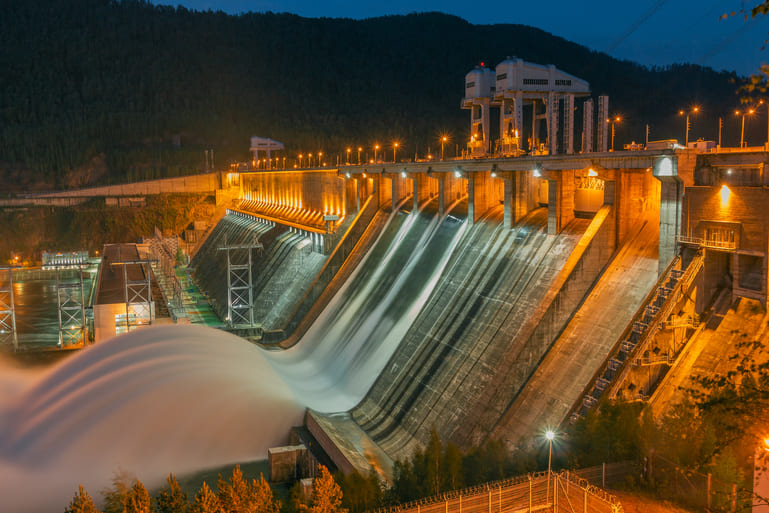
The Solar Energy Corporation of India (SECI) has invited bids for developing 1,000 MW / 8,000 MWh pumped storage projects (PSP-I) under the Build-Own-Operate (BOO) model. The tender, which allows up to eight hours of energy storage, aims to strengthen India’s renewable power infrastructure and ensure round-the-clock clean energy availability. Bids are open until February 9, 2026.
Under the RfS, Pumped Storage Plant Developers (PSPDs) are required to make storage facilities available to buying entities for “on-demand” charging and discharging. Bidders, including their affiliates or parent companies may submit proposals for a minimum capacity of 100 MW / 800 MWh and up to 1,000 MW / 8,000 MWh. Developers have full flexibility to choose and develop sites at their own cost and risk.
This initiative aligns with India’s strategy to expand pumped storage capacity, with the Ministry of Power identifying nearly 224 GW of potential nationwide. To date, 10 projects (7 GW) have been commissioned, another 12 GW are under construction, and over 56 projects (78 GW) are in various planning stages. Notably, all eight units of the 1,680 MW Pinnapuram PSP and the 500 MW Tehri PSP are expected to be commissioned during FY 2025–26.
Scope of Work & Performance Benchmarks
Developers must declare the Monthly Cycle Loss (MCL) at bid submission, capped at 25%, and fix the Declared Cycle Loss (DCL) as a performance benchmark for the project’s lifetime. For a 250 MW contracted capacity, buyers can schedule up to 2,000 MWh of discharge energy per cycle, with charging adjusted to account for conversion losses. For example, with a 15% DCL, the buyer would supply 2,353 MWh to achieve a 2,000 MWh discharge.
Operational Requirements & Penalties
The PSP must be available for two charge–discharge cycles per day and maintain 90% annual system availability. Any shortfall will attract a penalty equal to 1.5 times the Monthly Capacity Charges for the unavailable capacity, ensuring accountability and reliability under the Power Purchase Agreement (PPA).
This tender reinforces SECI’s commitment to advancing energy storage infrastructure and supporting India’s goal of achieving 500 GW of non-fossil capacity by 2030, while enabling flexible, grid-responsive renewable power for a sustainable future.
