



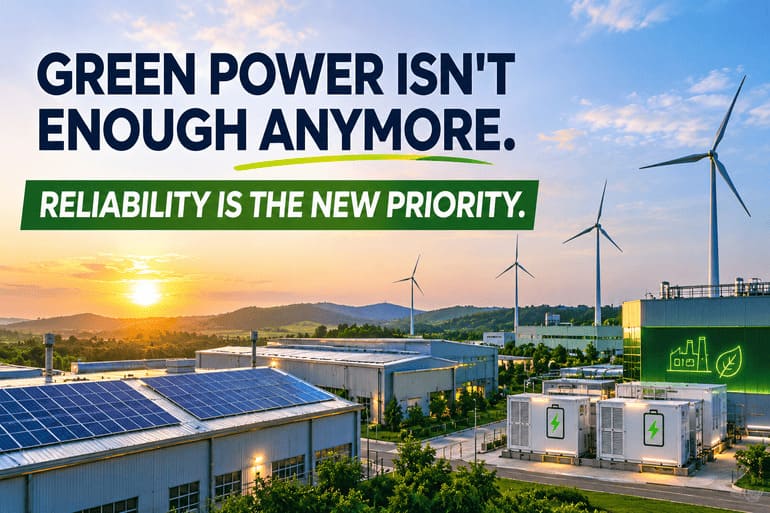
India’s corporate renewable energy procurement market is entering a new phase, driven by changing electricity requirements, growing sustainability commitments and the need for greater energy security. While businesses have traditionally turned to solar and wind power to reduce electricity costs and meet environmental targets, the priorities of industrial consumers are evolving. Today, access to affordable green electricity is only part of the equation. Businesses increasingly need reliable, flexible and predictable power that can support their operations while helping them achieve long-term decarbonization goals.
This shift is reshaping the commercial and industrial (C&I) renewable energy market, encouraging developers to move beyond standalone generation projects towards integrated solutions combining solar, wind, battery energy storage systems (BESS) and intelligent energy management. As India’s electricity demand expands, the ability to deliver renewable power when consumers need it could become a defining factor in the next phase of corporate energy procurement.
Changing Priorities of Corporate Energy Buyers
For several years, cost competitiveness has been one of the primary drivers of renewable energy adoption among commercial and industrial consumers. Companies have increasingly explored captive renewable energy projects, group captive arrangements and open access procurement to reduce their dependence on conventional electricity and manage power expenses.
However, electricity procurement decisions are becoming more complex. Manufacturing facilities, data centres, automobile plants, pharmaceutical companies and other energy-intensive businesses operate under different consumption patterns. Some require electricity throughout the day, while others experience significant variations in demand depending on production schedules and operating hours.
Standalone solar and wind projects may offer competitive electricity tariffs, but their generation patterns do not always correspond with the consumption requirements of businesses. Solar generation is concentrated during daylight hours, while wind generation depends on seasonal and weather conditions. This mismatch can create challenges for consumers seeking a consistent renewable electricity supply.
Consequently, businesses are beginning to evaluate renewable energy procurement through a broader lens. Alongside tariffs, they are considering supply reliability, generation profiles, contractual flexibility and the ability to reduce emissions across their operations.
The focus is gradually shifting from procuring renewable electricity to securing an energy solution that meets specific operational requirements.
Reliability becomes a defining factor in renewable energy procurement
One of the most significant developments in India’s renewable energy market is the growing emphasis on firm and dispatchable renewable power.
As the share of variable renewable energy increases in the electricity mix, matching generation with consumption becomes increasingly important. For industrial consumers, the availability of electricity at the required time can be just as important as the cost at which it is procured.
This is creating opportunities for procurement arrangements such as Round-the-Clock (RTC), Firm and Dispatchable Renewable Energy (FDRE) and peak power supply.
These models are designed to address specific electricity delivery requirements rather than relying exclusively on the generation profile of individual renewable energy technologies. Depending on the contractual structure, they can combine solar, wind, storage and other balancing resources to provide a more predictable supply profile.
For businesses operating energy-intensive facilities, such arrangements could offer greater visibility over electricity availability and help manage exposure to fluctuations in conventional power procurement.
The growing relevance of RTC and FDRE procurement also signals a broader transformation in the renewable energy business model. Developers are increasingly required to consider not only how much electricity a project generates but also when it can deliver that electricity and how closely its supply profile matches consumer demand.
Hybrid renewable energy projects gain importance
The integration of solar and wind power is emerging as an important approach to improving renewable energy utilization.
Solar and wind resources often have complementary generation patterns. Combining the two technologies can create a more balanced generation profile and potentially improve the utilization of transmission infrastructure. However, the extent of this benefit depends on resource availability, project location, system design and the consumer’s demand profile.
Hybrid renewable energy projects are therefore becoming increasingly relevant for businesses seeking to diversify their renewable electricity procurement.
For example, a manufacturing facility with electricity requirements extending beyond daylight hours may benefit from a combination of solar and wind generation. The addition of energy storage can further improve the ability to manage differences between generation and consumption.
This integrated approach also creates opportunities for developers to design projects around specific customer requirements. Instead of offering standardized solar or wind power solutions, they can explore combinations of generation technologies and storage based on consumption patterns, contractual obligations and long-term energy requirements.
As procurement preferences evolve, the ability to optimize multiple technologies within a single energy solution could become an important competitive advantage.
Battery storage could reshape corporate power procurement
Energy storage is becoming an increasingly important component of India’s renewable energy transition. Battery energy storage systems in particular can help address the variability associated with solar and wind generation by storing electricity when generation is available and releasing it when required.
For corporate consumers, BESS could offer several potential benefits. These include shifting renewable electricity consumption across different hours, managing peak demand and improving the utilization of renewable energy procured through hybrid arrangements.
However, the commercial viability of storage-integrated renewable energy projects will depend on several factors. Battery capital costs, degradation, operating efficiency, augmentation requirements, warranties and financing arrangements will influence the overall economics.
The choice of storage technology will also depend on the duration and nature of electricity requirements. While batteries can provide flexibility across different periods, pumped hydro storage can play an important role in meeting longer-duration storage requirements.
For industrial consumers, the key consideration will be whether the benefits of storage justify the additional investment and whether the resulting electricity supply arrangement offers sufficient long-term value.
As storage technologies mature and commercial models evolve, BESS is likely to become an increasingly important consideration in corporate renewable energy procurement strategies.
Data Centres and Industrial Expansion are creating new demand
India’s expanding manufacturing ecosystem and growing data centre industry are creating new requirements for electricity infrastructure.
The growth of artificial intelligence, cloud computing and digital services is increasing the importance of reliable electricity supply for data centres. These facilities require continuous power availability, making their energy procurement strategies particularly demanding.
Similarly, industries such as steel, cement, chemicals, automobiles and pharmaceuticals need electricity solutions that balance operational reliability with cost competitiveness and environmental performance.
This creates an opportunity for renewable energy developers to offer customized solutions rather than relying solely on conventional power purchase arrangements.
Hybrid renewable energy projects, storage-backed supply, power trading and digital energy management could become important components of these solutions. For data centres and other consumers with continuous electricity requirements, renewable procurement may also need to be supported by appropriate backup and balancing arrangements to meet their reliability standards.
The growing electricity requirements of these sectors could therefore accelerate demand for more sophisticated renewable energy procurement models.
Decarbonization is becoming central to corporate energy strategies
Beyond electricity costs and reliability, decarbonization is another major factor influencing corporate renewable energy procurement.
Businesses are increasingly integrating emissions reduction into their long-term strategies as sustainability expectations grow among customers, investors, supply-chain partners and regulators.
Electricity consumption is an important part of this transition, particularly for companies with significant purchased electricity requirements. Procuring renewable electricity can help businesses address their Scope 2 emissions, which arise from purchased electricity, steam, heating and cooling.
Companies are exploring different routes to increase renewable electricity consumption, including captive renewable energy projects, group captive arrangements, open access procurement and renewable energy certificates.
However, achieving meaningful emissions reductions requires more than signing renewable energy contracts. Businesses must also consider the generation attributes of procured electricity, the applicable emissions accounting frameworks and the extent to which renewable generation matches their consumption.
Over time, companies may place greater emphasis on transparent reporting, credible renewable electricity claims and improved alignment between energy procurement and actual consumption patterns.
This could encourage businesses to adopt more comprehensive energy strategies that combine renewable generation, storage, energy efficiency and demand management.
The Economics and Regulatory Challenges cannot be overlooked
Despite the growing opportunities, the transition towards integrated renewable energy procurement is not without challenges.
Hybrid and storage-backed projects often involve higher upfront investments and more complex project structures than standalone renewable energy installations. Developers must carefully evaluate generation profiles, storage sizing, battery degradation, transmission availability and long-term operating costs.
Regulatory considerations also influence the economics of corporate renewable energy procurement. Open access charges, banking provisions, cross-subsidy surcharges, additional surcharges and transmission charges can affect the overall cost of renewable electricity. These provisions may differ across states and consumer categories, making project-level assessment essential.
Transmission connectivity and power evacuation infrastructure are equally important. Renewable energy projects must be supported by adequate grid infrastructure to ensure that generated electricity can reach consumption centres.
Long-term power purchase agreements also need to account for supply obligations, scheduling, deviations, storage performance and other operational risks. Clear contractual arrangements and predictable regulatory frameworks will be important in encouraging greater investment in integrated renewable energy solutions.
For industrial consumers, the objective should be to evaluate the total cost and reliability of electricity over the contract period rather than focusing exclusively on the initial tariff.
Renewable energy developers must evolve into energy partners
The changing requirements of corporate consumers are also redefining the role of renewable energy developers.
Traditionally, developers primarily focused on establishing generation assets and supplying electricity through long-term power purchase agreements. However, the growing demand for reliable and flexible renewable power is creating a need for broader technical and commercial capabilities.
Developers will increasingly need expertise in solar and wind resource optimization, battery storage integration, forecasting, scheduling, power trading and digital energy management.
Their ability to understand individual customer consumption patterns and design customized supply arrangements could become an important differentiator.
This also creates opportunities for greater collaboration among renewable energy developers, storage providers, transmission companies, technology suppliers and industrial consumers. Such partnerships can help address the technical and commercial complexities associated with integrated energy solutions.
For C&I consumers, this could mean moving towards longer-term relationships with energy partners capable of addressing electricity costs, reliability and decarbonization together.
The Road Ahead
India’s corporate renewable energy procurement market is moving beyond the traditional focus on cheaper green electricity. Reliability, flexibility and decarbonization are emerging as interconnected priorities that will influence how businesses source and manage their electricity requirements.
The growing adoption of hybrid renewable energy projects, battery storage and firm power procurement arrangements points towards a more integrated approach to clean energy supply. However, the pace of this transition will depend on improving project economics, strengthening transmission infrastructure, creating predictable regulatory frameworks and developing commercially viable storage solutions.
For Indian industries, renewable energy procurement is increasingly becoming a strategic business decision rather than simply an alternative to conventional electricity. The next phase of growth will be shaped by how effectively businesses and developers can combine cost competitiveness, dependable power supply and measurable emissions reduction.
Ultimately, the future of corporate renewable energy will not be determined solely by how much green electricity is generated or purchased, but by how reliably and efficiently it can power India’s growing industrial economy.
