



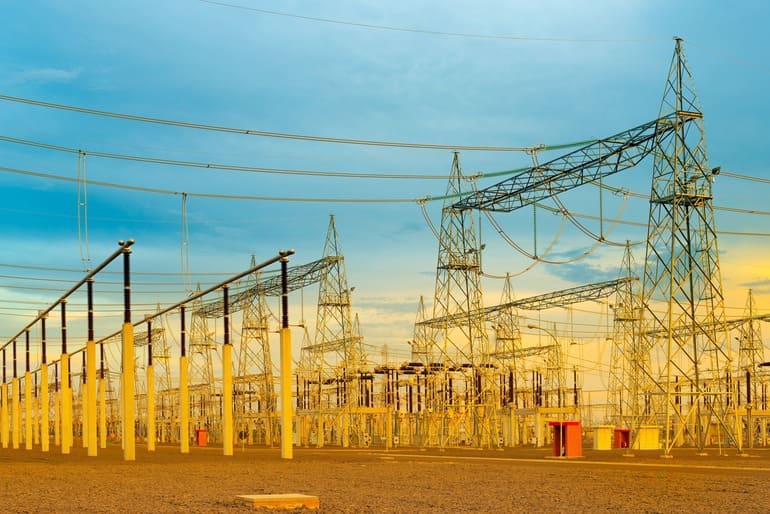
India is preparing for one of the largest electricity infrastructure expansions in its history. Over the next decade, the country plans to connect hundreds of gigawatts of renewable energy, support AI-driven data centres, power semiconductor fabs, electrify transport, expand manufacturing and strengthen industrial corridors. While much of the public discussion focuses on adding more megawatts, a far bigger challenge lies beneath the surface: building the electrical infrastructure capable of delivering that power reliably across the country.
The scale of this transformation is enormous. India has already crossed approximately 476 GW of installed power generation capacity, with nearly half of that capacity coming from non-fossil fuel sources. At the same time, the government has set an ambitious target of achieving 500 GW of non-fossil fuel capacity by 2030, a goal that will require one of the largest transmission infrastructure programmes ever undertaken in the country. Generating electricity is only one part of the equation. Moving it efficiently, safely and reliably to industries, cities and households will define the next phase of India’s energy transition.
Beyond the Market
Against this backdrop, reports that the Government of India had granted a temporary exemption allowing four Chinese-linked electrical equipment manufacturers with manufacturing facilities in India to participate in select government transmission tenders triggered an immediate reaction on Dalal Street. Shares of several listed power equipment companies, including manufacturers of transformers, switchgear, transmission towers and other grid infrastructure equipment, witnessed sharp declines as investors assessed what increased competition could mean for future order inflows and profitability.
The reaction was understandable. Over the past two years, India’s power equipment sector had emerged as one of the strongest performers in the market, supported by record order books, accelerating renewable energy investments, transmission expansion and rising electricity demand. As valuations climbed, investors began pricing in several years of sustained earnings growth. When policy uncertainty entered the picture, however limited it may have been, many chose to reassess those expectations. In financial markets, sectors that have enjoyed prolonged rallies often witness the sharpest corrections when sentiment changes, even if their long-term fundamentals remain intact.
However, while investors were busy analyzing stock charts and earnings projections, a much bigger question quietly remained in the background. The real issue is perhaps not whether a handful of companies participate in select transmission tenders, but whether India’s power equipment ecosystem is prepared for one of the biggest electricity infrastructure expansion programmes in the country’s history. That distinction matters because India’s energy transition will ultimately depend on much more than who wins the next government order. It will depend on whether the country can manufacture, install and modernize enough transformers, substations, switchgear, transmission towers and digital grid technologies to support an economy that is becoming increasingly electricity-intensive.
The timing of this debate could hardly be more significant. India is simultaneously pursuing ambitious renewable energy targets, expanding domestic manufacturing under initiatives such as Make in India, investing in semiconductor fabrication, encouraging battery manufacturing, supporting the growth of Artificial Intelligence-ready Data Centres and accelerating electric mobility. Every one of these sectors depends on reliable, uninterrupted electricity. More importantly, each depends on a transmission and distribution network capable of delivering that electricity efficiently and at scale. In many ways, the future of India’s energy transition may now depend less on how much electricity the country can generate and more on how effectively it can move that electricity across one of the world’s largest interconnected power systems.
Also Read: https://webnewsaddiction.com/enviro-infra-ham-portfolio-namami-gange-orders/
More Than Generation
Whenever a new thermal power station, solar park or wind farm is announced, the discussion almost always revolves around installed capacity. Headlines celebrate the addition of hundreds or even thousands of megawatts, governments highlight generation targets and investors track capacity expansion as an indicator of growth. While generation remains an important measure of progress, it tells only half the story. Electricity has little economic value if it cannot be transported efficiently from where it is produced to where it is needed.
India’s electricity network can be compared to a national highway system. Building additional power plants without strengthening transmission and distribution infrastructure is much like manufacturing millions of new vehicles without investing in roads, bridges or expressways. Congestion eventually becomes unavoidable. In the power sector, congestion takes the form of overloaded transmission corridors, renewable energy curtailment, higher transmission losses and delays in connecting new generation projects to the national grid.
This is precisely why the power equipment industry occupies such a critical position within India’s energy transition. Every transformer regulates voltage before electricity enters or exits the transmission network. Every substation enables power to be distributed safely across cities and industrial clusters. Switchgear protects expensive infrastructure from faults, while circuit breakers prevent local failures from escalating into widespread blackouts. Transmission towers, conductors and digital protection systems work quietly behind the scenes to ensure electricity generated hundreds of kilometres away can reliably reach factories, hospitals, airports, metro rail systems and homes. These assets rarely receive public attention, yet together they form the invisible backbone of the modern economy.
The importance of this infrastructure is only increasing as India’s energy mix evolves. Renewable energy projects are usually built wherever natural resources are most abundant rather than where electricity demand is highest. Massive solar parks are emerging across Rajasthan and Gujarat because of high solar irradiation, while wind farms continue to expand across Tamil Nadu, Karnataka and coastal Gujarat. The challenge is that many of the country’s largest electricity consumers are located hundreds of kilometres away. A manufacturing plant in Maharashtra, a semiconductor fabrication facility in Gujarat or a hyperscale data centre in Hyderabad cannot directly consume electricity generated by a solar park in western Rajasthan unless adequate transmission infrastructure exists to move that power efficiently across states. Every additional renewable energy project therefore creates demand not only for solar modules and wind turbines but also for transformers, substations, conductors, switchgear and advanced grid automation technologies.
The Invisible Backbone
As India’s grid becomes larger and more complex, the importance of these technologies is becoming even more evident. Unlike solar panels, wind turbines or power plants, transformers and substations rarely appear in promotional campaigns or newspaper headlines. Yet they perform some of the most critical functions within the electricity ecosystem. Transformers regulate voltage to minimize transmission losses over long distances. Circuit breakers and switchgear protect expensive infrastructure against faults. Gas-insulated substations enable reliable electricity distribution in densely populated urban environments where land is scarce. Protection relays, digital monitoring systems and grid automation technologies continuously monitor network health, helping utilities detect faults before they escalate into widespread outages.
Their importance is becoming even greater as India’s renewable energy capacity expands. Solar parks are typically developed where sunlight is strongest, while wind farms are established wherever wind resources are most favourable. These locations are often hundreds of kilometres away from major centres of electricity demand. A solar park in Rajasthan cannot directly power an automobile factory in Tamil Nadu, a semiconductor fabrication facility in Gujarat or a hyperscale data centre in Hyderabad unless sufficient transmission infrastructure exists to move electricity efficiently across states. Every additional renewable energy project therefore creates demand not only for solar modules and wind turbines but also for transformers, substations, conductors, switchgear and increasingly sophisticated digital grid technologies.
According to the National Electricity Plan (Transmission), India will need to add more than 190,000 circuit kilometres of transmission lines and around 1,270 GVA of transformation capacity by 2032 to accommodate rising electricity demand and renewable energy integration. That represents one of the largest transmission expansion programmes currently underway anywhere in the world. It also highlights why the power equipment industry is becoming strategically important not only for utilities but for the country’s broader economic ambitions.
The New Consumers
Perhaps the most significant shift is not simply that electricity demand is increasing, but that entirely new categories of consumers are emerging. Consider hyperscale data centres. A single AI-ready data centre can require anywhere between 50 MW and more than 100 MW of continuous electricity, depending on its size, consuming as much power as a medium-sized town. Unlike many traditional industries, these facilities cannot tolerate even brief interruptions in power supply, making highly reliable transformers, substations and transmission infrastructure essential. The importance of this segment is only expected to grow further. Industry estimates suggest that India’s data centre capacity is likely to more than double over the next few years, driven by rapid investments in Artificial Intelligence, Cloud Computing and digital services.
A similar trend is unfolding across semiconductor manufacturing. Semiconductor fabrication plants are among the most electricity-intensive industrial facilities in the world, requiring stable voltage, uninterrupted supply and highly reliable electrical infrastructure. Battery giga factories, electric vehicle charging corridors, metro rail systems, airports, logistics parks and green hydrogen projects are adding further pressure on the grid. Collectively, these industries are transforming electricity from a supporting utility into one of India’s most strategic economic assets.
That is why the future of India’s power sector is increasingly becoming a story about infrastructure rather than generation. Building another power plant is only the beginning. The far greater challenge lies in ensuring that electricity can travel efficiently, reliably and intelligently across one of the world’s fastest-growing economies.
Building Tomorrow’s Grid
The question, therefore, is no longer whether India needs more electricity. The country has already established itself as the world’s third-largest producer and consumer of electricity, and demand continues to grow steadily. The more pressing challenge is whether India can build the infrastructure required to deliver that electricity wherever economic growth demands it.
That challenge is becoming increasingly complex because the nature of electricity demand itself is changing. Artificial Intelligence-ready Data Centres, Semiconductor Manufacturing Facilities, Battery Giga factories, Electric Vehicle Charging Corridors, Green Hydrogen projects, Metro Rail systems and digitally connected Industrial Parks are emerging as major consumers of electricity. Unlike many traditional industries, these facilities require uninterrupted, high-quality power with minimal voltage fluctuations. Even a brief outage can disrupt manufacturing, damage sensitive equipment or interrupt digital services.
Building another power plant is therefore only the beginning. The next challenge is ensuring that electricity can travel reliably across thousands of kilometres to power tomorrow’s industries. The next phase of India’s energy transition is likely to be defined not only by the pace of renewable energy additions, but also by how effectively the broader power ecosystem scales transmission infrastructure, manufacturing capacity and grid technologies to support future demand.
* The perspectives presented in this opinion piece are informed by publicly available market data, industry trends, infrastructure developments and ongoing engagement with stakeholders across India’s energy, digital and industrial ecosystems.
