



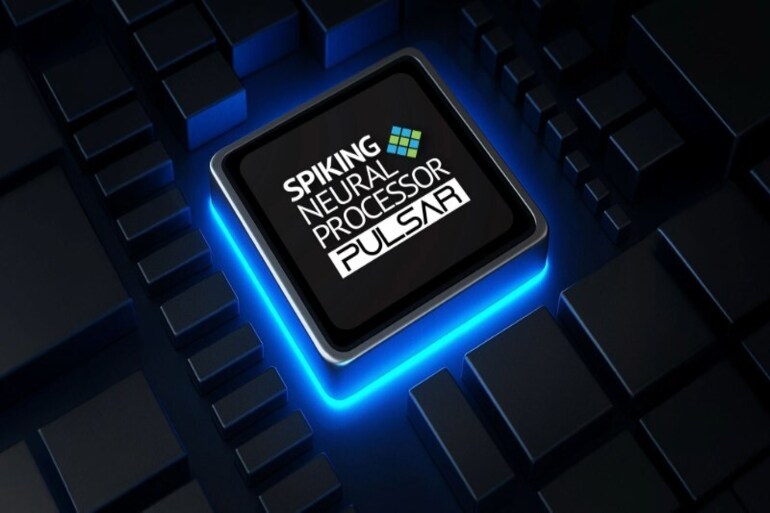
Innatera, a pioneer in brain-like neuromorphic computing for ultra-low-power intelligence at the sensor edge, has selected Synopsys, Inc. to support the design and validation of its next-generation neuromorphic microcontrollers. Synopsys’ advanced electrostatic discharge (ESD) and power integrity analysis solutions will enable Innatera to scale production and meet rising demand for edge processing across industrial sensors, robotics, wearables, and smart home applications.
Neuromorphic microcontrollers process data using Spiking Neural Networks (SNNs) that replicate the communication patterns of biological neurons, delivering real-time, energy-efficient intelligence directly at the sensor edge. This event-driven architecture is optimized for environments where low latency and minimal power consumption are essential. Innatera’s design integrates mixed-signal analog computation, dense interconnect architectures, and low-voltage operation features that enhance efficiency but can introduce electrical noise and ESD vulnerability. To mitigate these risks and ensure reliable performance in complex neuromorphic circuits, Innatera utilizes PathFinder-SC and Totem to validate power integrity, control noise coupling, and safeguard reliability without sacrificing speed or efficiency.
PathFinder-SC performs large-scale simulation of electrostatic discharge (ESD) events, enabling engineers to detect vulnerabilities and uncover root causes before designs move into manufacturing. By modelling real-world electrostatic scenarios with high precision, it helps ensure chips operate reliably under practical operating conditions. The tool also delivers early, high-fidelity analog modeling, allowing designers to verify performance across a wide range of environments.
Totem conducts in-depth power integrity analysis at the transistor level to ensure stable power delivery and consistent performance for energy-efficient AI applications. When combined with PathFinder-SC’s advanced ESD detection capabilities, the integrated solution provides a comprehensive reliability framework. Together, the tools help designers mitigate both predictable and unforeseen electrical risks throughout the chip’s life cycle, supported by strong technical expertise.
“Innatera’s mission to redefine edge AI through neuromorphic computing requires both technological innovation and reliable design collaboration,” said Aditya Dalakoti, Director of SoC and mixed-signal at Innatera. “Synopsys stood out for its leading technology and unwavering support for startups in the edge AI ecosystem. Its ESD analysis solution and collaborative approach enable us to scale into real-world, adaptive applications with enhanced speed, usability, and versatility.”
Innatera leveraged Synopsys technology to validate the design of Pulsar, the world’s first commercial neuromorphic microcontroller. Built for edge AI applications, Pulsar integrates a flexible computing architecture that delivers up to 100x lower latency and 500x lower energy consumption compared to conventional AI processors. Powered by Spiking Neural Networks (SNNs), Pulsar operates on an event-driven model, activating only when meaningful sensor changes occur. This selective processing significantly enhances data transfer efficiency and extends battery life for always-on devices such as wearables and smart sensors.
“By enabling Innatera to accelerate product development and scale confidently, Synopsys reinforces its role as a catalyst for cutting-edge technologies shaping the future of embedded AI,” said Prith Banerjee, Senior Vice President at Ansys, part of Synopsys. “This collaboration underscores our commitment to empowering innovation across the semiconductor ecosystem, from global enterprises to emerging startups. As edge computing becomes increasingly central to real-time intelligence, Synopsys simulation is helping innovators bring efficient AI where it’s most needed.”

1 Comment
Pingback: Siemens and TSMC Advance AI Chip Design Collaboration